

The UPI 4-hour rule is a temporary cooling period that can delay certain payments, especially first-time or high-risk transactions made through UPI apps and banks.
This delay usually applies when you send money to a new beneficiary, reset your UPI PIN, change devices, or trigger a fraud-risk alert.
In this article, we explain when the UPI 4-hour cooling period applies, why UPI payments get delayed, and what you can do if your transaction is stuck.
When Does the UPI 4-Hour Cooling Period Apply?
The UPI 4-hour cooling period does not apply to every transaction. It is usually triggered only in specific situations where banks or UPI apps detect higher risk or unusual activity.
Some of the reasons are as follows.
1. Sending Money to a New Beneficiary
The UPI 4-hour rule is most commonly seen when you send money to a new contact for the first time. In some cases, the payment may be delayed for verification.
2. Resetting or Changing UPI PIN
If you have recently reset your UPI PIN, your bank may temporarily restrict or delay transactions to ensure account safety.
3. Using a New Device or Reinstalling the UPI App
Logging in from a new smartphone or reinstalling apps like Google Pay, PhonePe, Paytm, or BHIM can trigger additional security checks, leading to short delays.
4. SIM Swap or Mobile Number Update
Banks often treat SIM swaps or mobile number changes as high-risk events, which can result in a temporary cooling period for UPI payments.
5. Unusual or High-Value Transactions
If a transaction looks unusual compared to your normal spending pattern, banks may hold it briefly for fraud screening.
6. Multiple Failed UPI Attempts
Repeated failed transactions in a short time can trigger security alerts, leading to temporary restrictions or delays.
Which Banks and UPI Apps Follow the 4-Hour Rule?
The UPI 4-hour rule is not applied uniformly by all banks or apps. It is a risk-based security delay that depends on the bank’s fraud detection system and the type of transaction.

In most cases, the delay is controlled by the bank (issuer bank), while UPI apps simply act as a platform to initiate payments.
The table below shows how the UPI 4-Hour rule works across banks and apps.
| Layer | Role in UPI 4-Hour Delay | Examples |
|---|---|---|
| Bank (Issuer Bank) | Applies security checks and may delay or hold risky transactions | SBI, HDFC Bank, ICICI Bank, Axis Bank |
| UPI Apps | Provide an interface for transactions, but do not directly decide delays | Google Pay, PhonePe, Paytm, BHIM |
| UPI Network | Defines the payment framework and rules but does not impose case-by-case delays | National Payments Corporation of India |
Important Point to Understand
There is no official rule that forces all banks or apps to delay every transaction for 4 hours. The delay depends on internal fraud detection systems and transaction risk scoring.
This means the same UPI app can work instantly for one transaction and may show a delay for another, depending on the bank’s security checks.
In most cases, these delays are temporary and resolve automatically once the verification is complete.
UPI Transaction Delayed for 4 Hours? Here’s What You Should Do
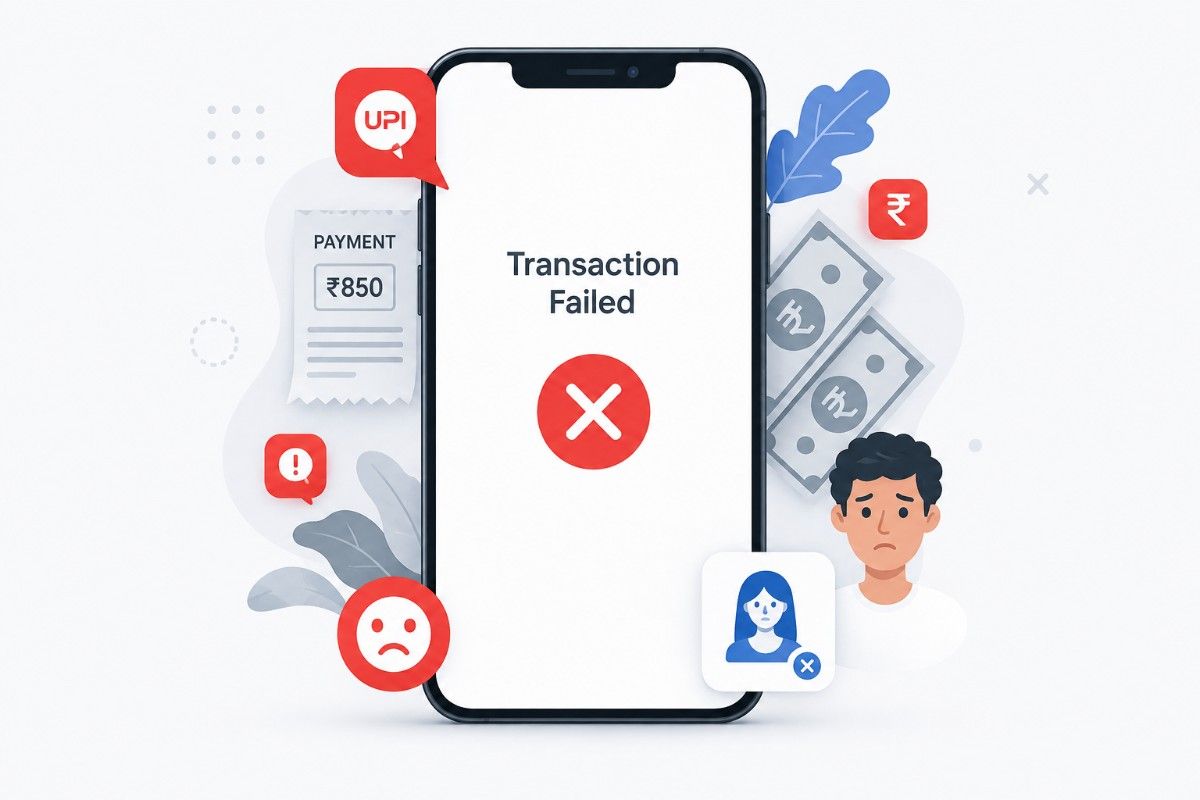
A UPI transaction delay of up to 4 hours is usually temporary and happens due to bank-level security checks. In most cases, the transaction completes automatically without any action from your side.
If your UPI payment is stuck, the key is to stay calm and follow a few basic steps instead of retrying the transaction repeatedly.
1. Check the transaction status in your UPI app
Open your UPI app like Google Pay, PhonePe, Paytm, or BHIM and check whether the payment is marked as pending, processed, or failed.
2. Avoid retrying the payment immediately
If a transaction is pending, do not resend the money right away. Multiple attempts can sometimes trigger additional security checks and further delays.
3. Check your bank account balance
Verify whether the money has already been debited from your account. In many cases, the amount is deducted, but the status update is delayed.
4. Wait for automatic reversal or completion
Most UPI transactions that are stuck due to processing delays are either completed or reversed automatically within a few hours.
5. Check SMS or email alerts from your bank
Your bank often sends transaction updates or reversal notifications, which can help you understand the actual status of the payment.

6. Contact your bank if the issue continues
If the UPI payment remains unresolved for more than 24 hours, contact your bank’s customer support with the transaction reference UPI ID for further assistance.
Can You Avoid or Reduce UPI Payment Delays?
UPI payment delays cannot be completely avoided because banks use security checks to prevent fraud. However, you can reduce the chances of a UPI 4-hour delay by following safe usage habits.
Most delays happen when a transaction looks unusual to the bank’s system, so consistent and normal usage helps payments go through faster.
Quick tips to reduce UPI payment delays
- Send money to saved or trusted contacts whenever possible
- Avoid making large first-time payments to new beneficiaries
- Do not enter the wrong UPI PIN repeatedly during transactions
- Keep UPI apps such as Google Pay, PhonePe, Paytm, and BHIM updated
- Avoid frequently changing your device or SIM card
- Maintain regular and consistent transaction patterns
- Ensure your mobile number is properly linked with your bank account
Even after following these steps, occasional delays can still happen because UPI systems run automated fraud checks to keep transactions secure.
How the UPI 4-Hour Rule Helps Prevent Online Fraud
The UPI 4-hour rule is designed as a security feature to reduce online fraud in UPI transactions. It gives banks time to verify suspicious activity before money is fully processed.

From the points below, we can understand how the UPI 4-Hour rule prevents online fraud.
- Blocks or slows down first-time transfers to unknown beneficiaries, reducing scam risks
- Helps banks detect and stop suspicious or unusual transaction patterns in real time
- Adds a safety window in case of account takeover or unauthorized UPI access
- Reduces losses from SIM swap fraud by delaying high-risk transactions temporarily
- Gives users time to react if a payment was made by mistake or under pressure
Common Myths About the UPI 4-Hour Rule
Many users get confused about the UPI 4-hour rule because online discussions often mix facts with assumptions. Most of these myths come from misunderstanding how UPI security checks actually work.
1. Myth: UPI payments are always delayed for 4 hours
Reality: The 4-hour delay does not apply to all transactions. It only happens in specific cases like first-time transfers or high-risk activity flagged by the bank.
2. Myth: All banks follow a fixed 4-hour rule
Reality: There is no universal rule that forces every bank to delay UPI payments for 4 hours. Each bank applies its own fraud detection and risk checks.
3. Myth: Money is stuck when a UPI payment is delayed
Reality: In most cases, the transaction is either completed after verification or automatically reversed if it fails.
4. Myth: UPI apps control the 4-hour delay
Reality: Apps like Google Pay, PhonePe, Paytm, and BHIM only act as platforms. The actual delay decisions are made by banks.
5. Myth: Every new UPI transaction is delayed
Reality: Only suspicious or high-risk transactions may face delays. Most regular payments are processed instantly.
Conclusion: The UPI 4-Hour Rule Is Inconvenient but Necessary
The UPI 4-hour rule is a security-based delay system that may slow some payments, but it is designed to protect users from fraud and unauthorized transactions.
While it can feel inconvenient during urgent transfers, this temporary delay helps banks verify suspicious activity and reduce risks in the growing digital payment ecosystem.
Overall, UPI payment delays are part of a safer banking system, and understanding how they work helps users avoid confusion and manage transactions more confidently.
FAQs
No, saved or frequently used beneficiaries usually process instantly unless unusual activity or bank-level security flags the transaction.
Sometimes settlement delays occur between banks, and funds are either credited later or automatically reversed within a few hours.
Yes, temporary system issues or network delays can cause a debit without immediate credit, later resolved through the automatic reversal process.
Yes, each bank uses its own fraud detection system, so delays depend on internal risk scoring rather than a fixed rule.
Not always, because repeated attempts can trigger fraud detection systems, increasing chances of further delays or temporary transaction holds.