

UPI is a full banking payment system, while UPI Lite is a lightweight wallet for small, fast digital payments in India.
In this article, we will understand UPI vs UPI Lite, how they work, and which one is better for your daily payment needs.
What is UPI and How Does It Work in India?
UPI, or Unified Payments Interface, is a real-time digital payment system in India that allows instant money transfers between bank accounts.
It was developed by the National Payments Corporation of India (NPCI) to make cashless payments simple, fast, and secure for everyone.
UPI works by linking your bank account to a mobile app using a UPI ID. You can send or receive money using a QR code, mobile number, or UPI ID.
Here’s how UPI works in simple steps:
- You open a UPI-enabled app like Google Pay, PhonePe, or Paytm
- You enter the receiver’s UPI ID or scan a QR code
- The payment request is sent to your bank
- You enter your UPI PIN to approve the transaction
- Money is transferred instantly from your bank account to the receiver’s account
What is UPI Lite and Why Was It Introduced?
UPI Lite is a simplified version of UPI designed for fast and small-value digital payments in India. It works like a small prepaid wallet inside your UPI app.
Unlike regular UPI, which directly uses your bank account for every transaction, UPI Lite lets you load a small amount and use it for quick payments without delays.
UPI Lite was introduced to make small transactions smoother and more reliable, especially when banking networks are busy or slow.
It also solves common issues like transaction failures for low-value payments and reduces load on the banking system during peak usage.
UPI vs UPI Lite: Key Differences Explained
UPI and UPI Lite are both part of India’s digital payment system, but they are designed for different types of transactions and user needs.
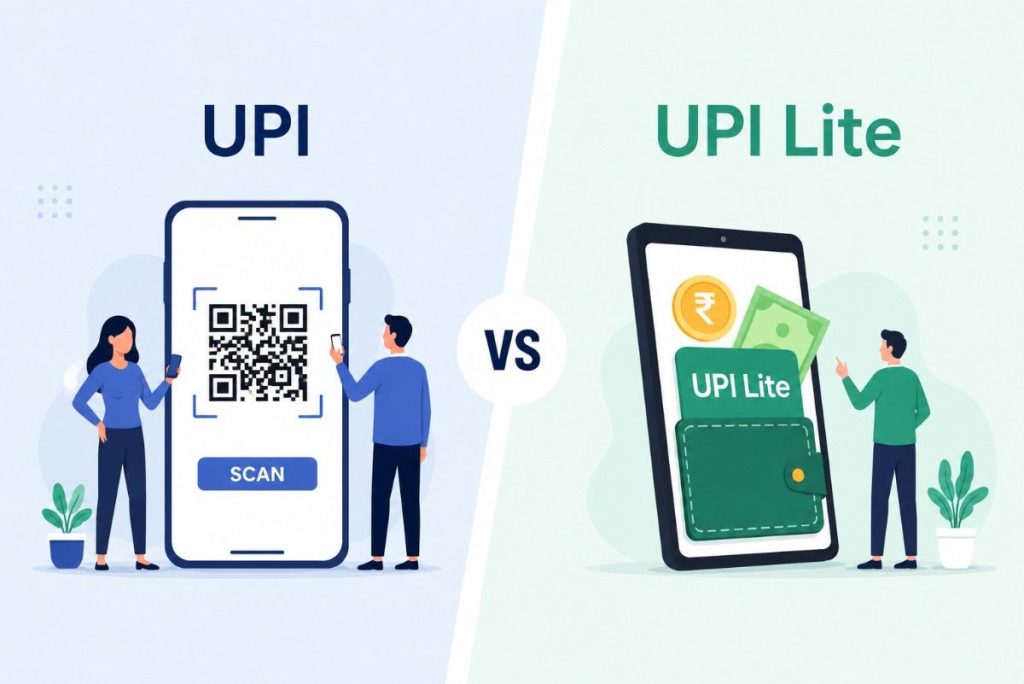
The main difference lies in how they handle money, speed, and usage. UPI connects directly to your bank account, while UPI Lite works through a small prepaid balance for quick payments.
| Feature | UPI | UPI Lite |
|---|---|---|
| Source of funds | Direct bank account | Preloaded wallet balance |
| UPI PIN | Required for every transaction | Not required for small payments |
| Transaction speed | Standard bank processing | Faster for quick payments |
| Internet requirement | Needs active internet | Works better in low network conditions |
| Best use case | Bills, transfers, online shopping | Tea, snacks, transport, small daily spends |
Limits, Safety, and Security of UPI vs UPI Lite
UPI and UPI Lite are both safe digital payment systems, but they differ mainly in UPI transaction limits and how payments are processed.
UPI is designed for higher-value transactions directly from your bank account, while UPI Lite is meant for small, everyday payments using a preloaded wallet balance.
Transaction Limits
UPI handles large payments, while UPI Lite is restricted to low-value daily spending.
- UPI (regular):
Most banks allow up to ₹1,00,000 per day for standard transactions. Certain categories, like investments or bill payments, can go up to ₹2,00,000–₹5,00,000 depending on the use case and regulations. - UPI Lite:
UPI Lite is designed for small payments, with a per-transaction limit of ₹1,000 and a wallet limit of ₹5,000 as per RBI’s updated framework.
Safety and Security
Both systems are regulated by NPCI and RBI-authorised banks, ensuring strong security standards and fraud monitoring.
- UPI:
Every transaction requires a UPI PIN, making it highly secure for bank-to-bank transfers. If the PIN is not entered correctly, the transaction fails. - UPI Lite:
Does not require a UPI PIN for each small transaction, but the risk is controlled through a limited wallet balance, reducing exposure to fraud.
Real-Life Use Cases: Where to Use UPI vs UPI Lite
Millions of Indians widely use both UPI and UPI Lite. However, they serve different spending needs.
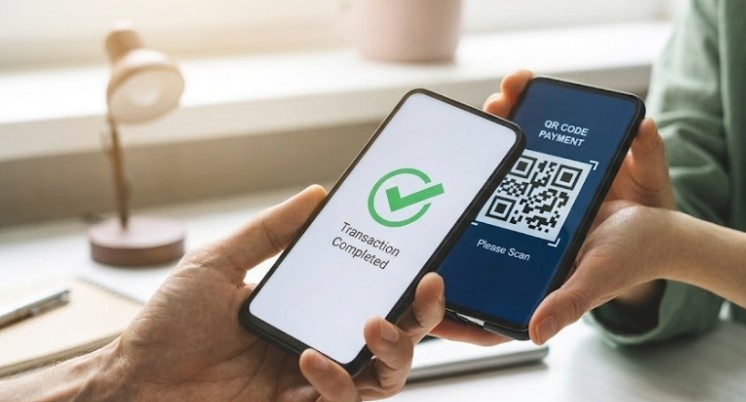
UPI is better for larger and formal payments, while UPI Lite is designed for small, quick, everyday expenses.
| Situation / Use Case | UPI | UPI Lite |
|---|---|---|
| Bill payments (electricity, water, mobile recharge) | Suitable | Not suitable |
| Online shopping and e-commerce | Suitable | Not suitable |
| Money transfer to friends/family | Suitable | Not preferred |
| Rent and large monthly payments | Suitable | Not suitable |
| Insurance and investments | Suitable | Not applicable |
| Tea, coffee, snacks | Optional | Ideal |
| Auto, metro, local transport | Optional | Ideal |
| Small grocery or kirana shop payments | Optional | Ideal |
| Parking and small fees | Optional | Ideal |
UPI vs UPI Lite: Which One Should You Use?
Choosing between UPI and UPI Lite depends on how you usually spend money in your daily life. Both are useful, but they are designed for different payment needs.
If you regularly make higher-value payments like bills, online shopping, or money transfers, UPI is the better option because it works directly with your bank account and supports larger transactions.
If your spending is mostly small and frequent, like tea, snacks, transport fares, or small shop payments, UPI Lite is more convenient because it is faster and does not require a PIN for every transaction.
Simple guide to help you decide:
- Use UPI if you make regular or high-value payments
- Use UPI Lite if you make frequent small daily payments
- Use both together for maximum convenience and flexibility
In many cases, users prefer combining both UPI for important transactions and UPI Lite for quick everyday spending.
Conclusion: UPI vs UPI Lite – The Smarter Choice Depends on Your Needs
UPI vs UPI Lite comes down to usage. UPI is built for full-scale bank payments, while UPI Lite is designed for quick, low-value everyday transactions.
Both systems work together to make digital payments in India faster, simpler, and more reliable, especially as cashless usage continues to grow across urban and semi-urban areas.
UPI offers higher limits and full banking features, whereas UPI Lite reduces friction by enabling instant small payments without a PIN and with better performance in low-network situations.
Overall, the best approach is to use UPI for important financial transactions and UPI Lite for small daily expenses to get the most convenience.
FAQs
Yes, UPI Lite can process small payments even with weak connectivity, as transactions are handled locally through the app wallet balance.
No, UPI Lite balance does not earn any interest since it functions like a prepaid digital wallet for quick transactions only.
Yes, users can transfer their unused UPI Lite balance back to their linked bank account anytime through supported UPI applications easily.
Yes, sometimes UPI transactions may slow or fail during peak loads due to temporary bank server congestion or network issues.
Currently, most UPI and UPI Lite transactions are free for users, though banks may revise charges based on policy updates.