


To apply for a Kisan Credit Card, visit your nearest bank branch or apply online through the Jan Samarth portal.
The KCC scheme, launched in 1998 by NABARD, provides farmers with affordable credit for agriculture and allied activities.
With the Union Budget 2025-26 raising the interest subvention limit from Rs 3 lakh to Rs 5 lakh, farmers can now access subsidised loans at an effective interest rate of just 4% per annum.
What Is a Kisan Credit Card (KCC) and How Does It Work?
A Kisan Credit Card is a revolving credit facility issued by banks to farmers. It works like a flexible loan account where farmers can withdraw funds up to their approved limit, repay, and borrow again without submitting fresh paperwork each time.
The scheme was designed by NABARD on the recommendations of the R.V. Gupta Committee. Its core purpose is to replace dependence on informal moneylenders with affordable institutional credit.

Here is what makes the KCC useful for farmers:
The card covers a wide range of expenses. These include purchasing seeds, fertilisers, pesticides, and equipment. Post-harvest storage, household consumption, and farm asset maintenance are also covered.
Banks set the credit limit for five years and review it annually. Farmers do not need to reapply each season, which saves time during critical sowing periods when funds are needed most.
In 2019, the government expanded the scheme to include allied sectors. Farmers engaged in animal husbandry, dairy, fisheries, and poultry can now access KCC credit for their working capital needs.

The KCC also functions as a debit card. Farmers can use it to withdraw cash from ATMs, make payments at input dealer outlets, and receive crop sale proceeds directly into the linked bank account.
As the RBI’s draft KCC Directions 2026 proposes, KCC accounts will also support digital channels such as UPI, mobile banking, NEFT, and RTGS.
If your KCC is linked to a bank like SBI, you may want to learn how to create a UPI ID with SBI for managing your account digitally
Who Can Apply for a Kisan Credit Card?
The KCC eligibility criteria, based on RBI master circulars, are broad enough to cover most farmers and allied activity workers. Here is who qualifies:
- Individual farmers or joint borrowers who own and cultivate land
- Tenant farmers, sharecroppers, and oral lessees
- Self-Help Groups (SHGs) or Joint Liability Groups (JLGs) of farmers
- Fishermen, fish farmers, and those in inland fisheries or aquaculture
- Farmers engaged in dairy, animal husbandry, poultry, or beekeeping
There are a few additional conditions that banks check:
| Criterion | Requirement |
|---|---|
| Age | 18 to 75 years |
| Co-borrower | Required if the applicant is above 60 years |
| Minimum credit eligibility | Rs 5,000 or more in production credit |
| Service area | Applicant must reside within the bank branch’s jurisdiction |
The minimum credit eligibility of Rs 5,000 means that even small and marginal farmers qualify. If you meet these criteria and are involved in any form of agriculture or allied activity, you are eligible.
Documents Required to Apply for a Kisan Credit Card
The documentation requirements are straightforward. Most farmers will already have these documents readily available.
- Identity proof: Aadhaar card (preferred), voter ID, PAN card, or passport.
- Address proof: Aadhaar card, ration card, driving licence, voter ID, or a utility bill not older than three months.
- Land documents: Ownership records (7/12 extract, khatauni, patta) or tenancy agreement, lease deed, or a certificate from the local revenue authority confirming cultivator status.
- Other documents: Two passport-size photographs, a duly filled application form (available at the bank or downloadable from the bank’s website), and existing bank account details, if applicable.
For applicants in fisheries, dairy, or poultry, additional documents such as proof of activity (lease of pond, ownership of cattle, registration of poultry farm) may be required.
The exact list can vary slightly between banks. It is advisable to confirm with your chosen bank branch before visiting.
How to Apply for a Kisan Credit Card
You can apply for a KCC through two main channels. Choose the one that is more convenient for your situation.
Offline Application Process
This is the most common method, especially in rural areas where bank branches are the primary point of contact.
Step 1: Visit the nearest branch of any public sector bank, Regional Rural Bank (RRB), or cooperative bank. Major banks issuing KCCs include SBI, Punjab National Bank, Bank of Baroda, Canara Bank, and HDFC Bank.
Step 2: Request the KCC application form from the agricultural loans counter. Some banks also allow you to download the form from their website in advance.
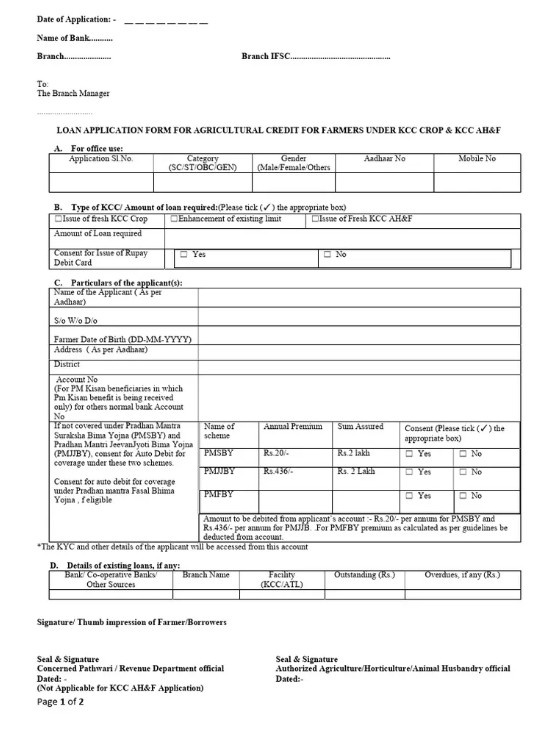
Step 3: Fill in all required details carefully. This includes personal information, land details (area, location, survey number), cropping pattern, and expected income from agriculture.
Step 4: Attach all required documents (listed above) and submit the form to the agriculture loan officer at the branch.
Step 5: The bank will verify your documents, conduct a field inspection of your landholding, and assess your credit eligibility. This typically takes 7 to 14 working days.
Step 6: Once approved, the bank will issue your KCC along with a passbook that records your credit limit, withdrawals, and repayments.
PM-Kisan beneficiaries have a faster route. All PM-Kisan Samman Nidhi beneficiaries are auto-eligible for a KCC and can apply by submitting a simple one-page form at their bank branch using their PM-Kisan ID.
Online Application Process
Digital applications are becoming more accessible, particularly through the d-KCC (Digital KCC) initiative that uses Aadhaar-based e-KYC for faster approvals.
Through Jan Samarth Portal:
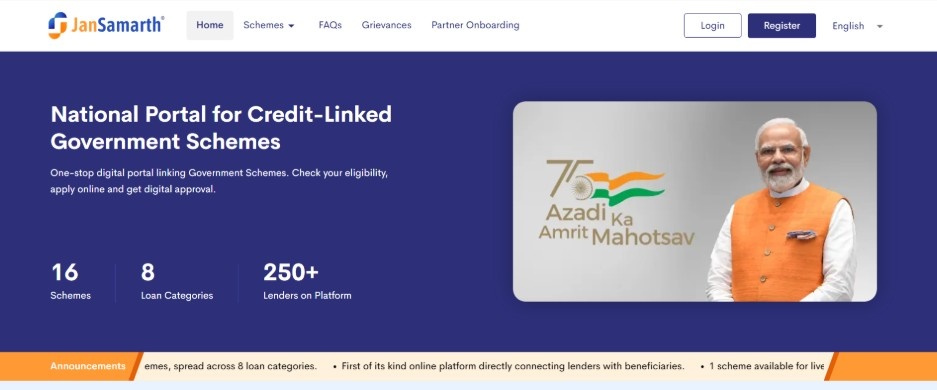
- Visit jansamarth.in and select “Kisan Credit Card Scheme.”
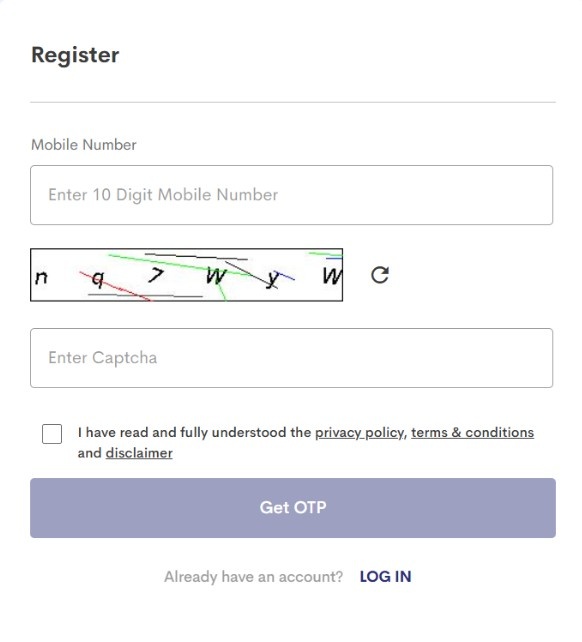
- Register with your mobile number and complete the eligibility check.
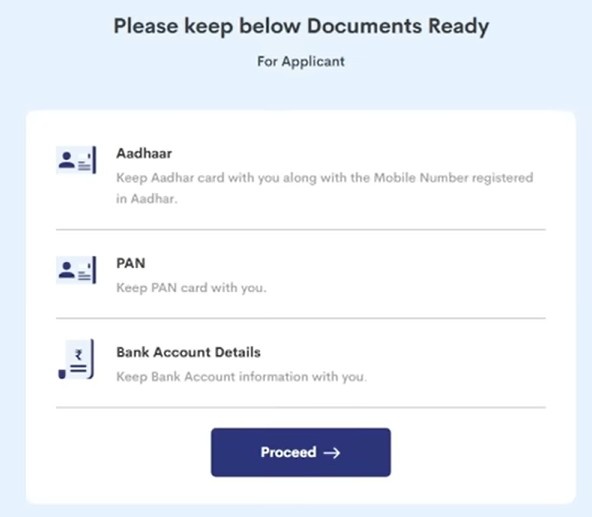
- Fill in your personal, agricultural, and financial details.
- Upload scanned copies of the required documents.
- Submit the application. The system routes it directly to your selected bank’s loan processing system.
- Track your status online. The bank will schedule a field visit within 7 to 14 working days.
Through the PM Kisan Portal:
- Visit pmkisan.gov.in and click “Kisan Credit Card (KCC)” under Quick Links.
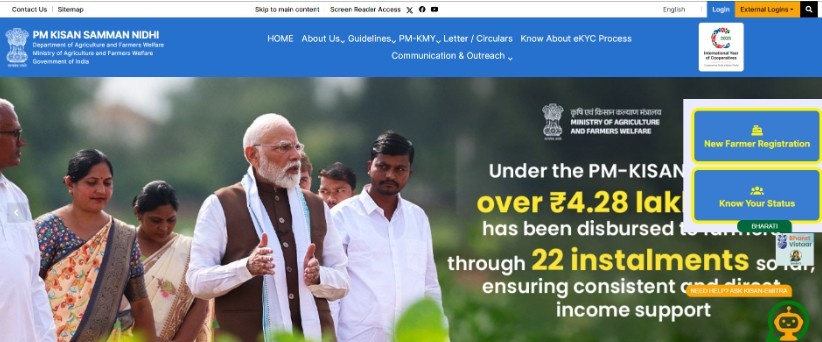
- Select “Apply for KCC,” and you will be redirected to your bank’s portal or a Common Service Centre (CSC).
- Fill in land details, crop type, Aadhaar number, and expected income.
- Submit and note your application reference number for tracking.
Additionally, many banks, including SBI and PNB, also accept KCC applications through their own internet banking portals or mobile apps.
Once the bank approves your KCC and links it to your bank account, you can operate it through digital payment channels.
Kisan Credit Card Loan Limit, Interest Rate, and Repayment
Understanding the financial terms of your KCC helps you plan borrowing and repayment effectively.
How the KCC Loan Limit Is Calculated
The credit limit is not a flat amount. Banks calculate it using a formula defined by the RBI based on the farmer’s specific situation:
KCC Limit = (Scale of Finance x Area Cultivated) + 10% for post-harvest/consumption needs + 20% for farm asset maintenance + crop insurance premium
The Scale of Finance (SOF) is the per-acre credit amount fixed by the District Level Technical Committee (DLTC) for each crop in each district. It varies by state, district, and crop.
Example: A farmer in Maharashtra cultivating 2 acres of soybean with a Scale of Finance of Rs 25,000 per acre would have a base limit of Rs 50,000.
Adding 10% (Rs 5,000) for post-harvest needs, 20% (Rs 10,000) for farm asset maintenance, and approximately Rs 2,000 for crop insurance brings the first-year limit to around Rs 67,000. This limit increases by 10% each year to account for cost escalation.
Interest Rate Structure
| Component | Rate |
|---|---|
| Base interest rate on KCC crop loans | 7% per annum |
| Government interest subvention (MISS) | 1.5% (paid to banks) |
| Prompt Repayment Incentive (PRI) | 3% (credited to the farmer) |
| Effective rate for timely repayers | 4% per annum |
The Union Budget 2025-26 raised the interest subvention ceiling from Rs 3 lakh to Rs 5 lakh. This means farmers can now borrow up to Rs 5 lakh at the subsidised 7% rate, and those who repay on time pay an effective rate of just 4%.
For loans above Rs 5 lakh, interest rates are determined by individual banks and are typically higher.
Collateral and Repayment
Loans up to Rs 2 lakh are collateral-free. In cases involving crop hypothecation and tie-up arrangements for recovery, banks can waive collateral up to Rs 3 lakh.
Repayment is aligned with the harvesting or marketing cycle. Short-term crop loans are typically repayable within 12 months. For long-duration crops, the repayment window extends to 18 months.
The KCC is valid for five years, subject to annual review. The RBI’s draft Directions 2026 propose extending this to a six-year composite tenure.
Common Reasons Why a KCC Application May Be Rejected
Knowing what causes rejections can help you avoid mistakes and strengthen your application.
- Incomplete or incorrect documents are the most common cause. Missing land records, expired identity proofs, or mismatched names between documents often lead to rejection. Double-check every document before submission.
- Poor credit history matters. If you have defaulted on a previous bank loan or have outstanding dues, the bank’s risk assessment may flag your application. Clearing existing dues before applying improves your chances.
- Land verification failure can cause rejection. If the bank’s field inspection finds discrepancies between your declared landholding and the actual records, the application will not proceed.
- Not being within the bank’s service area is a requirement many applicants overlook. You must apply at a bank branch that covers the area where your land is located. Applying to a different branch will result in rejection.
- Aadhaar not linked to your bank account can delay or block the application, especially for online applications that use Aadhaar-based e-KYC.
If your application is rejected, first request the specific reason in writing from the bank. Then address the issue and reapply. Alternatively, you can approach a different bank or a Regional Rural Bank if the original branch is unhelpful.
Conclusion: Apply for a KCC at your nearest bank or online.
The Kisan Credit Card scheme remains one of the most farmer-friendly credit programmes in India.
With the enhanced loan limit of Rs 5 lakh and an effective interest rate of 4% for prompt repayers, it provides affordable and flexible financing for agriculture and allied activities.
Whether you apply at your nearest bank branch or through the Jan Samarth portal, keeping your documents ready will help ensure a smooth approval process. Moreover, it helps speed up verification and reduces delays in approval.
FAQs
Yes. Tenant farmers, sharecroppers, and oral lessees are eligible for a KCC. You will need a tenancy agreement, a lease deed, or a certificate from the local revenue authority confirming your cultivator status.
Most banks process KCC applications within 7 to 14 working days after document submission. Online applications through the d-KCC initiative may be processed faster due to Aadhaar-based e-KYC verification.
Banks may charge a nominal processing fee, which varies by institution. Many public sector banks waive the processing fee for small and marginal farmers. Confirm the charges with your bank before applying.
Yes. The KCC functions as a RuPay debit card and can be used at ATMs of any bank for cash withdrawals, subject to the daily withdrawal limits set by your issuing bank.
You lose the 3% Prompt Repayment Incentive, which means your effective interest rate rises from 4% to 7%. Continued default can lead to the account being classified as a non-performing asset (NPA), which affects your credit history and future borrowing eligibility.
No. Since 2019, the KCC scheme covers allied activities including dairy farming, animal husbandry, fisheries, poultry, and beekeeping. Separate credit sub-limits are fixed for these activities based on working capital requirements.