

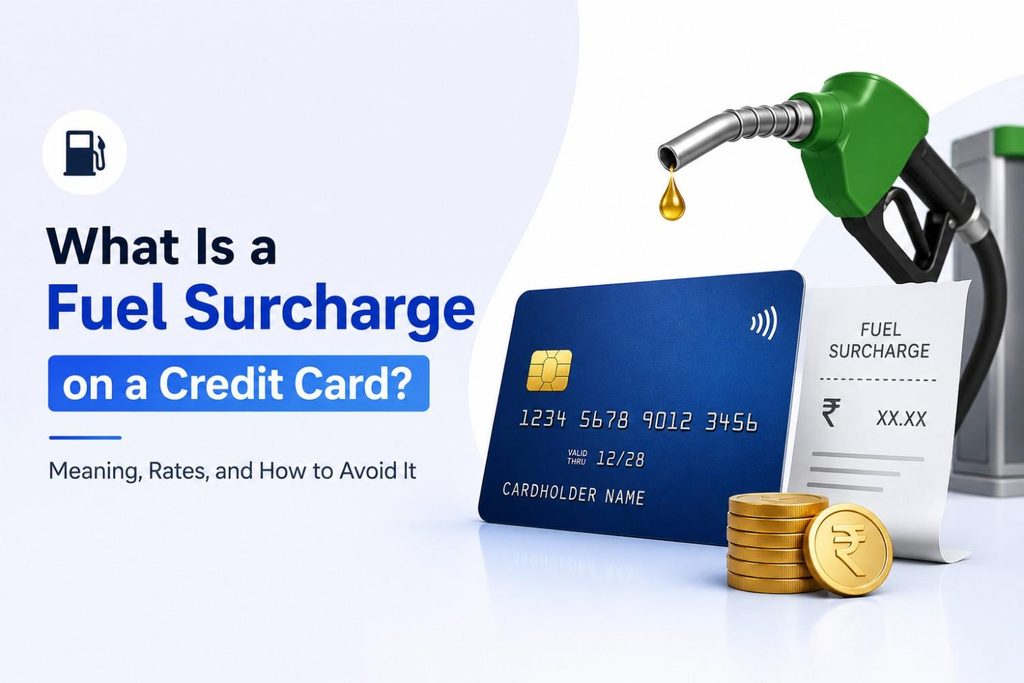
A fuel surcharge is an extra fee, typically 1% of the bill, that banks add when you pay for petrol or diesel with a credit card.
It exists because fuel stations run on thin margins and cannot absorb card processing costs. Most credit cards waive this fee within set transaction limits, but 18% GST on the surcharge usually still applies even after the waiver.
What Is a Fuel Surcharge on a Credit Card
Every time you pay for fuel via your credit card, a fuel surcharge is imposed by the bank associated with the petrol pump over and above the price of the fuel. The fuel surcharge is independent of the cost of the fuel you use, whether petrol or diesel.
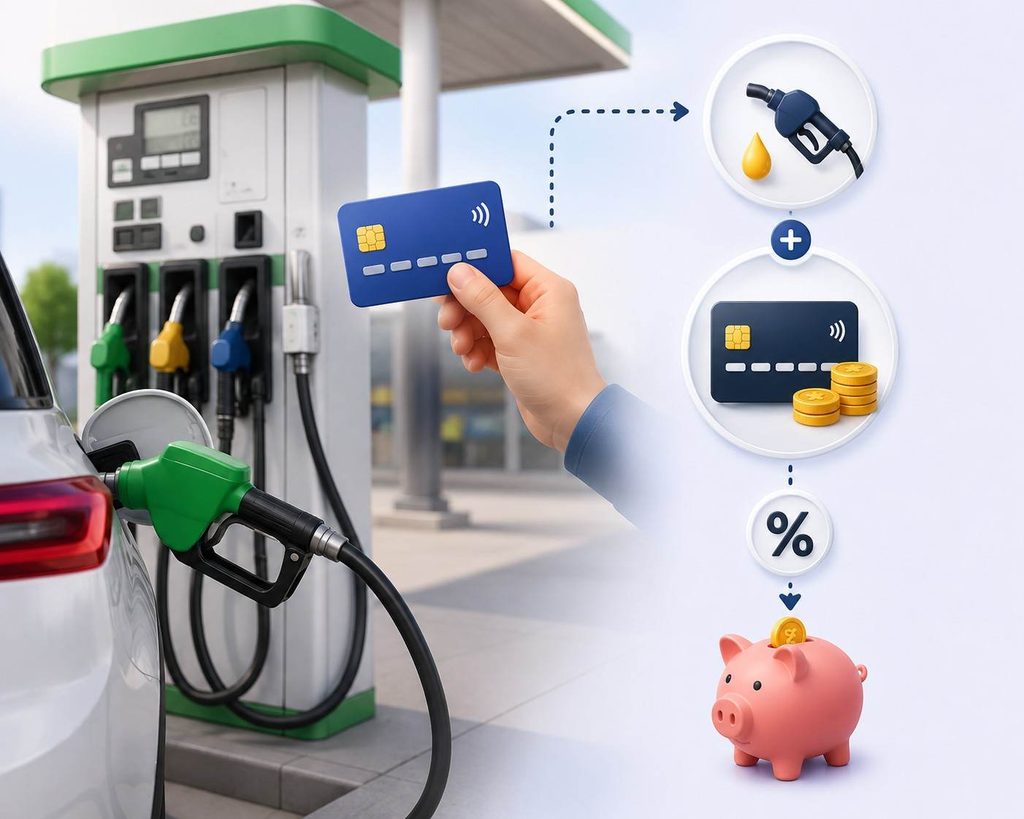
The fuel surcharge is imposed because oil companies cannot be allowed to cover the costs of the transaction charges on their own, hence, the burden is passed to the cardholder.
This fuel surcharge is charged by the bank that acquires the petrol pump and not by your credit card issuing bank, which intervenes only in case of waiver benefits on the credit card.
Why Banks and Fuel Stations Charge This Fee
The fuel retail business is a low-margin business. The margins for fuel stations are small; therefore, the discount rate charged on fuel transactions by banks is very low and ranges between 0.25% and 0.5%.
Since the merchant discount rate cannot fully cover the cost of processing the transaction, the bank makes up the difference by charging the consumer, and this explains why the fee is added to your statement separately and not embedded in the cost of fuel.
How Much Is the Fuel Surcharge on Credit Cards in India
The surcharge rate has decreased over the years due to the encouragement of digital payments for fuel.
The SBI Card reduced its fuel surcharge rate from 2.5% to 1% in 2017, which came as a result of the reduction of the fuel surcharge rates by the oil marketing companies.
Currently, the surcharge rate is common across all banks.
- Every fuel transaction via a credit card in India comes with an automatic 1% surcharge rate.
- While acquiring banks charge a 1% base fee (or a minimum fee of ₹10 on small purchases), most credit card issuers only apply a waiver if your single fuel bill is between ₹400 and ₹5,000.
- However, some credit card issuers and card programmes still use the higher band fuel surcharge rates, which are between 1% and 2.5% of the fuel transaction amount.
- Some credit card issuers impose a fixed charge rate instead of a percentage surcharge rate.
This implies that the surcharge rate charged may differ from one bank to another depending on the acquiring bank and card issuer.
How GST Applies to the Fuel Surcharge
The surcharge itself is not the only extra cost. An 18% GST is charged on the surcharge amount itself, not on the fuel purchase.
This distinction matters because most waiver programmes only reverse the base surcharge. Most credit cards waive the base fuel surcharge of 1% but do not waive the GST charged on that surcharge, so even with a waiver, you typically still pay the GST portion.
Example Calculation on a ₹2,000 Fuel Bill:
| Component | Amount |
|---|---|
| Fuel bill | ₹2,000 |
| Fuel surcharge (1%) | ₹20 |
| GST on surcharge (18% of ₹20) | ₹3.60 |
| Total extra charge | ₹23.60 |
| Amount reversed under a typical waiver | ₹20 |
| Amount you still pay even after waiver | ₹3.60 |
Fuel Surcharge Waiver: What It Means and How It Works
A fuel surcharge waiver is a benefit where your card issuer reverses the surcharge amount, usually in the same or next billing cycle, so you effectively avoid the extra fee.
A standard waiver reverses only the 1% base surcharge amount. The 18% GST applied to that surcharge is generally not reversed on standard cards, though specialized co-branded fuel cards often provide equivalent reward points to offset this residue.

This distinction matters when comparing cards. A card advertising “5% fuel savings” may be combining a waiver with separate reward points, so the real cash-in-hand benefit is often smaller than the headline number suggests.
Typical Waiver Conditions Across Indian Banks
Waivers are not unconditional. Almost every bank sets a minimum spend, a maximum eligible spend, and a monthly ceiling on how much can be reversed.
| Bank / Card type | Minimum transaction | Maximum eligible transaction | Monthly waiver cap |
|---|---|---|---|
| HDFC Bank (standard cards, per official MITC) | ₹400 | ₹5,000 | ₹250 to ₹500 depending on card variant |
| HDFC Bank (select premium cards) | ₹400 | ₹1,00,000 | ₹1,000 |
| HSBC India | ₹400 | ₹4,000 | Not specified as a fixed amount, but transactions of ₹4,001 and above are not eligible |
| Axis Bank | ₹200 | ₹5,000 | Varies by card |
| SBI Card (general reward cards) | ₹500 | ₹3,000 | ₹100 per statement cycle. |
Sources: HDFC Bank Official MITC, HDFC Bank Official, HSBC India, Axis Bank
Because these limits vary so widely, filling your tank just below or just above the eligible band can mean losing the waiver entirely.
If your total fuel bill exceeds your card’s maximum eligible limit, use two different credit cards or pay the excess balance via UPI rather than swiping the same card twice on the same visit.
Who Is Eligible for a Fuel Surcharge Waiver
Eligibility is tied to the card, not to a separate application process. Any resident or non-resident Indian between the ages of 18 and 70 years can apply for a credit card that carries this benefit, subject to standard documentation such as PAN, address proof, income proof, and identity proof.
In practice, this means you do not need to opt in separately. If your card’s terms include a fuel surcharge waiver, it applies automatically whenever a fuel transaction falls within the eligible transaction band.
How to Avoid or Reduce the Fuel Surcharge
A few practical habits help most cardholders capture the waiver consistently instead of losing it to fine print.
- Check your card’s minimum and maximum eligible transaction amount before filling up, since most waivers only apply for transactions between roughly ₹400 and ₹4,000.
- Track your monthly cap, since exceeding it means the surcharge on the remaining amount is not reversed.
- Use a co-branded fuel card if you consistently refuel at one oil company’s outlets, since these typically offer higher earn rates at the partner brand’s stations, along with a guaranteed fuel surcharge waiver at those stations.
- Remember that the GST portion of the surcharge is rarely waived, so a small residual charge is normal even on an eligible transaction.
- Confirm the waiver reflects on your statement, since the surcharge is first charged at the pump and then reversed in your subsequent statement, rather than being blocked upfront.
This last point matters because if the reversal does not appear within one or two billing cycles, it is worth raising a dispute with your card issuer rather than assuming the benefit lapsed.
Fuel Surcharge vs Fuel Surcharge Waiver at a Glance
Fuel surcharges and fuel surcharge waivers can both impact your travel costs, but they work in very different ways.
| Aspect | Fuel Surcharge | Fuel Surcharge Waiver |
|---|---|---|
| What it is | A fee charged on card fuel payments | A benefit that reverses that fee |
| Who levies or grants it | The fuel station’s acquiring bank | Your own card issuer, as a card feature |
| Typical rate | 1% of the transaction, minimum ₹10 | Usually matches the surcharge rate, subject to caps |
| GST treatment | 18% GST applies on the fee | GST is usually still payable even after the waiver |
| Availability | Applies on almost all card fuel payments | Only on cards specifically offering this benefit |
Conclusion: Fuel Surcharge is A Card Processing Fee, Often Waived But Rarely GST-Free
Understanding fuel surcharge on a credit card comes down to two numbers: the 1% base fee and the 18% GST on that fee. Most cards waive the first within transaction limits, but the GST portion almost always remains.
Checking your card’s specific minimum, maximum, and monthly cap ensures you actually capture the waiver every time you refuel, rather than assuming it applies automatically.
FAQs
To avoid fuel surcharges or extra credit card fees at gas stations, use an alternative payment method like cash or a debit card, or use a specialized fuel credit card that offers an automatic surcharge waiver.
The “1% fuel surcharge” levied on a credit card is an additional charge that is equal to 1% of your total purchase amount, charged when you purchase petrol or diesel.
This charge is levied by fuel stations or credit card companies to cover the transaction fees at the pump. Many credit cards provide a “1% fuel surcharge waiver.”
Typically yes. The surcharge is charged first at the point of sale, then reversed as a separate credit entry in your subsequent statement, so you can usually spot both the charge and its reversal by checking two consecutive billing cycles.
Generally yes, since the fuel surcharge is a card network-related fee tied to credit and debit card processing costs, and UPI transactions do not attract this specific charge. This is one reason many fuel stations now display UPI as the lower-cost payment option at the counter.