

In India, you can pay certain taxes online using a credit card through the Income Tax Department’s e-Filing portal and its authorized payment gateways.
Credit card payments are available through the Payment Gateway option, alongside UPI, debit cards, and net banking. The tax department itself does not charge a separate payment gateway fee, but the selected bank or payment gateway may charge a transaction fee that is added to the tax amount.
Paying tax with a credit card can be useful when you need a convenient online payment method or short-term payment flexibility. However, the additional fee and any interest charged by your card issuer can make it more expensive than UPI or other payment methods.
This guide explains how to pay income tax with a credit card, the current payment process, applicable charges, benefits, risks, and alternatives.
Steps To Pay Tax With A Credit Card
Paying income tax with a credit card is simple and completely online. The Income Tax Department’s e-Filing platform enables you to finish the transaction securely using recognized payment gateways.

Follow the steps below:
Step 1: Visit the e-Filing Portal
Open the official Income Tax e-Filing portal, where all online tax payments are initiated. This is the starting point for paying tax with a credit card.
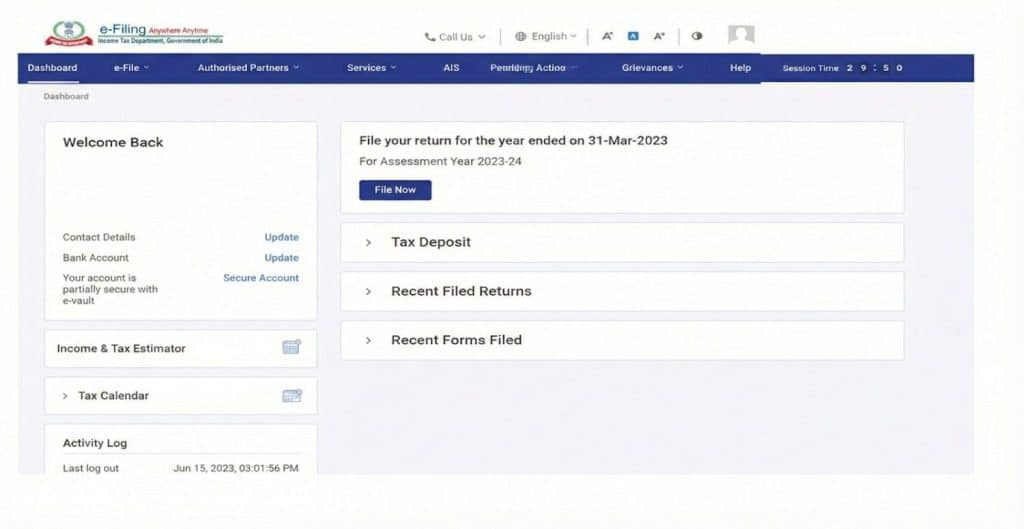
Step 2: Navigate to e-Pay Tax
Click on e-Pay Tax to reach the section dedicated to online income tax payments. This option applies to both logged-in and guest users.
Step 3: Generate Challan / CRN
Enter your PAN and tax information to obtain a Challan Reference Number (CRN). The CRN identifies and tracks your tax payment.
Step 4: Select Payment Gateway
Choose an authorized payment gateway that accepts credit cards for income tax payments. The gateway secures the transaction.
Step 5: Enter Credit Card Details
Enter your credit card details, complete the authentication process, and confirm the payment.
After a successful payment, the Income Tax Department sends a confirmation email and SMS to the registered contact details, and the payment details and challan receipt become available in the Payment History section.
If your credit card is charged but the CRN does not immediately show as paid, wait at least 30 minutes and check the status again. In some cases, reconciliation with the bank can take up to one day.
Benefits Of Paying Taxes With A Credit Card
Paying taxes with a credit card can be helpful in certain situations. The benefits are as follows:
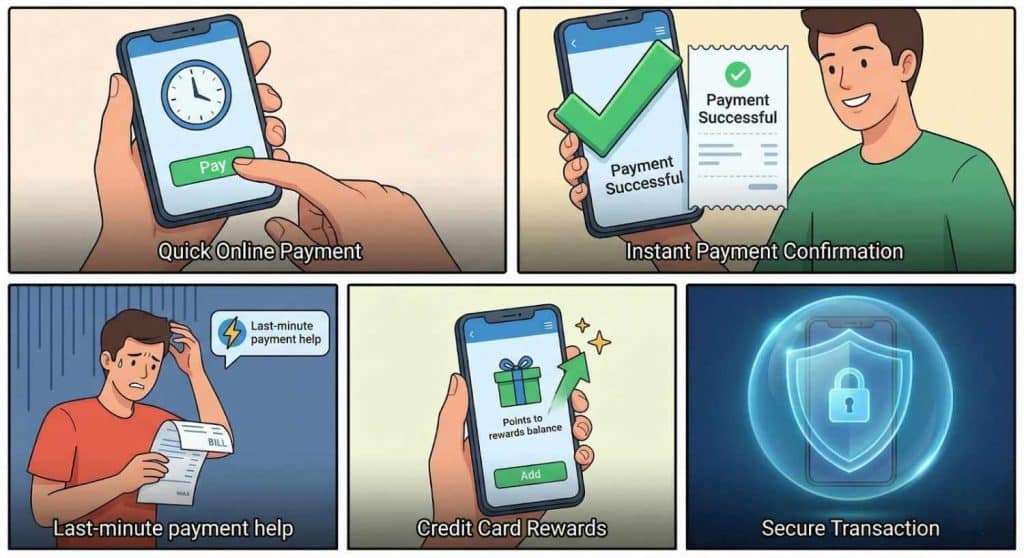
- Quick Online Payment
The entire process is digital and can be completed without visiting a bank by using an authorized payment channel on the income tax e-Filing portal.
- Instant Payment Confirmation
When the credit card payment is successful, you will receive an immediate acknowledgement and a challan, allowing you to avoid last-minute delays or penalties.
- Useful During Urgent or Last-Minute Payments
If you are close to a tax deadline and running low on cash, a credit card can help you pay your taxes on time and avoid late fees.
- Short-Term Payment Flexibility
A credit card can provide short-term payment flexibility when you need to make a tax payment before your available cash is received. This only makes financial sense if you can repay the card balance by the due date.
- Potential Rewards
Some credit cards may provide rewards for tax-related transactions, while others exclude tax payments from rewards or milestone calculations. Check your card’s current terms before relying on rewards to offset the payment fee.
- Secure Transaction Process
Tax payments conducted through recognized payment gateways follow standard security checks, ensuring that credit card tax payments are secure and reliable.
Risks and Downsides Of Paying Taxes With A Credit Card
While paying taxes using a credit card is convenient, it does come with some charges and risks that taxpayers should be aware of before using this payment method.

The risks are as follows:
- Extra Convenience Fees
Credit card tax payments typically incur a convenience or processing fee charged by the payment gateway, raising the overall cost of paying tax.
- Interest Charges if Not Repaid on Time
If you do not pay your credit card bill in full by the due date, interest will be applied, making tax payment much more expensive.
- Impact on Credit Utilisation
Paying a large tax amount with a credit card can increase your credit utilisation ratio, which may affect your credit score.
- Not All Cards or Banks Are Supported
Certain credit cards may be incompatible with the income tax payment gateway, resulting in rejected transactions or limited payment options.
Credit Card Fee on a ₹1 Lakh Tax Payment
Suppose you pay ₹1,00,000 in income tax using a payment gateway that charges 0.85% for credit card transactions.
The gateway fee would be ₹850. With 18% GST on the fee, the additional charge would be ₹153.
Your total payment would therefore be ₹1,01,003.
This is why the credit card’s rewards or other benefits should be compared with the payment gateway fee before using a credit card for a large tax payment.
Tips For Paying Taxes with A Credit Card
If you want to pay your taxes with a credit card, a few quick checks can help you avoid high costs and maximize the benefits of this payment method.
- Always check the convenience or processing fee charged by the payment channel before confirming your credit card tax payment.
- To avoid rejected transactions, ensure that your available credit limit is sufficient to meet the tax amount.
- Clear your credit card balances in full before the due date to prevent interest charges on your tax payment.
- Download and save the tax receipt as proof of payment for future reference or verification.
- Compare lower-cost methods such as UPI or online banking before using a credit card to pay taxes.
Related Reads:
Conclusion: You Can Pay Taxes With A Credit Card
You can pay eligible taxes with a credit card through supported payment gateways on the Income Tax Department’s e-Filing portal.
However, a credit card is not necessarily the cheapest way to pay tax. Payment gateway charges can add to the tax amount, and applicable GST is charged on the gateway fee. You may also receive no credit-card rewards if your card excludes tax transactions.
Before paying, compare the gateway fee with the value of any rewards and consider lower-cost options such as UPI or net banking.
If you use a credit card for short-term payment flexibility, make sure you can repay the full card balance by the due date. Otherwise, credit-card interest can easily outweigh any convenience or rewards.
FAQs
Yes, advance tax and self-assessment tax can be paid with a credit card via the e-Filing portal’s authorized payment channels.
Some banks offer reward points for tax payments, but many exclude them. Always check your card’s terms before paying.
Yes, payments are processed via safe, authorized channels that use encryption and standard authentication to ensure security.
If a payment fails, no taxes are deducted. You can retry with the same or a different card, but make sure your credit limit is sufficient.
No, fees differ between banks and payment gateways. It is preferable to verify the exact charges before confirming your payment.