

A credit card loan is a pre-approved loan that a bank offers against your existing credit card, either as a lump sum transferred to your bank account or as an easy EMI conversion of a big purchase.
No new application, collateral, or fresh documentation is usually needed. The bank simply taps your available credit limit and converts part of it into a structured loan with fixed monthly instalments.
For salaried and self-employed individuals who need quick funds, this is often faster than a regular personal loan because the bank already has your credit history and repayment record on file.
How Does a Credit Card Loan Work?
The process is designed to be quick because the lender already knows your spending pattern and repayment history. Most banks disburse the amount within a few minutes to a few hours once approved.
1. Apply: Request a loan through your bank’s net banking, mobile app, or by calling customer care.

2. Approval: The bank checks your eligibility, credit score, and available credit limit instantly.

3. Disbursal: The loan amount is transferred to your linked savings account, or adjusted against your card limit for EMI conversion.

4. Repayment: You repay through fixed EMIs added to your monthly credit card statement or bank account.

How to Apply for a Credit Card Loan: Step-by-Step Process
Applying is largely digital now. Here is the typical process followed by most major Indian banks:
1. Open your bank’s mobile banking app or net banking portal and go to the “EMI & More” or “Loan on Credit Card” or “Insta Loan” section.
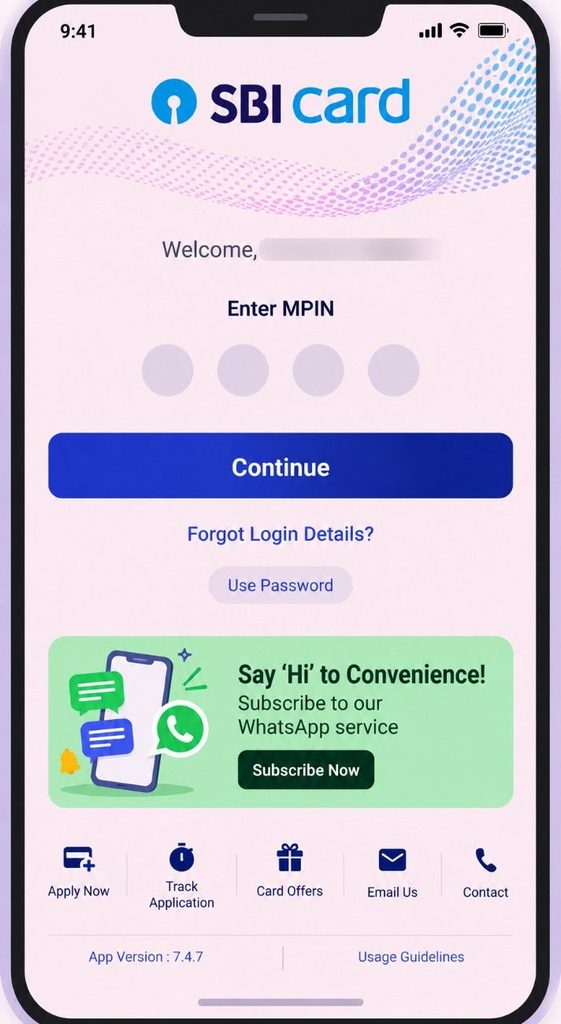
2. Check the pre-approved amount, tenure options, and interest rate shown to you.
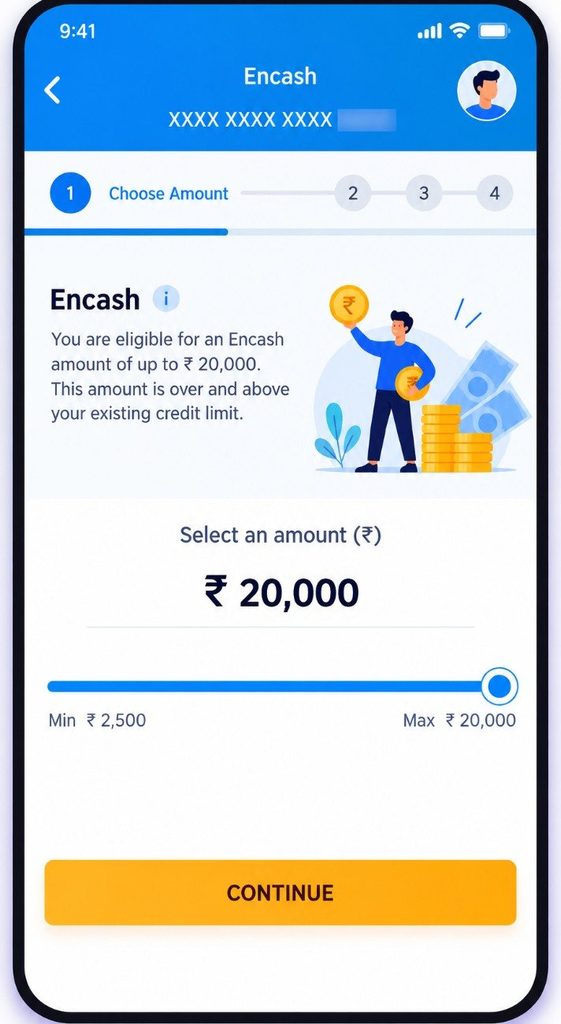
3. Select the loan amount and tenure that fit your repayment capacity.
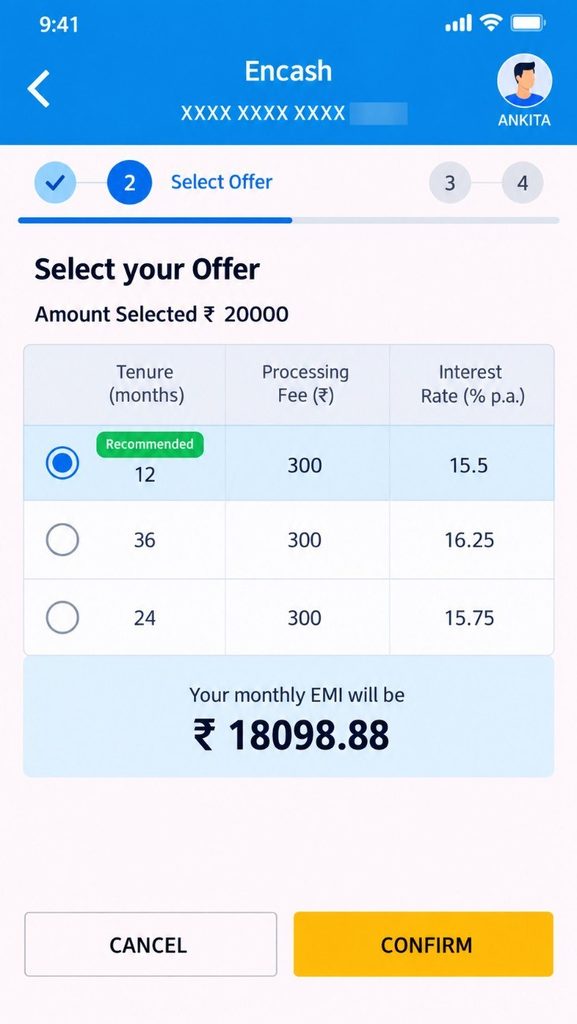
4. Enter your details and confirm the request using OTP or app-based authentication.
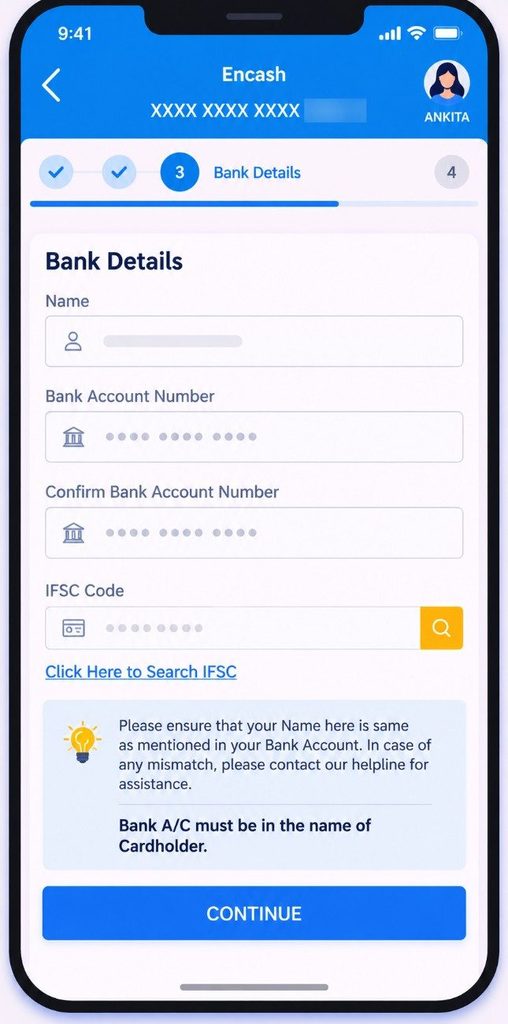
5. Receive the funds directly in your savings account, in some cases within minutes.
While a credit card loan offers quick access to funds against your existing limit, its interest rates and shorter tenures may not suit everyone, especially for larger borrowing needs. In such cases, comparing RBI Approved Loan Apps can help you find regulated personal loan options with higher amounts, flexible repayment periods, and transparent interest rates. Choosing a lender that operates under RBI’s digital lending guidelines ensures your borrowing stays safe, compliant, and free from hidden charges.
Credit Card Loan Eligibility Criteria
Eligibility for a credit card loan is simpler than a fresh personal loan because the bank already holds your transaction history. Common requirements include:
- An active credit card with the same bank for a minimum period, usually 3 to 6 months
- A clean repayment record with no recent missed or delayed payments
- Sufficient available credit limit to support the loan amount
- A satisfactory credit score, generally above 700
Card issuers also check the applicant’s age at the time of card issuance. If you are unsure whether you even qualify for a card in the first place, it helps to review the minimum age requirement for a credit card before applying for any credit-linked loan.
Documents Required for a Credit Card Loan
Because most credit card loans are pre-approved, documentation is minimal:
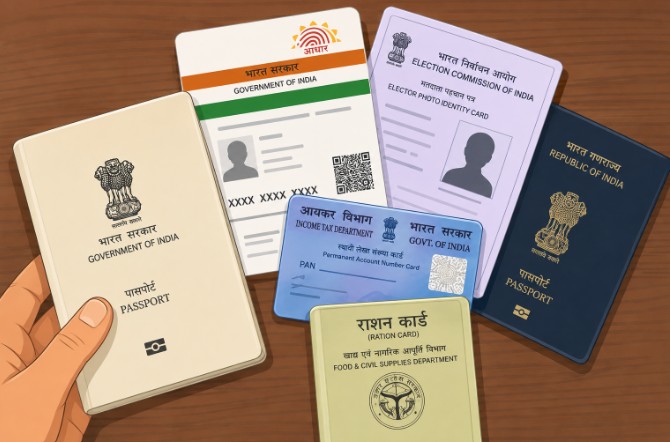
- PAN card and Aadhaar for identity verification (in some cases, auto-fetched from KYC already on file)
- Linked bank account details for disbursal
- No separate income proof is usually needed since the card issuer already has this on record
This is one of the biggest advantages of a credit card loan over a regular personal loan, where fresh salary slips, bank statements, and income tax returns are almost always mandatory.
Credit Card Loan Interest Rates and Charges
Interest rates and fees vary by bank, card type, and your credit profile, so it is worth comparing before you commit rather than accepting the first offer shown in your app.
| Charge | Typical Range | Notes |
|---|---|---|
| Interest Rate | 0.84% per month onwards on HDFC Bank’s Insta Loan to 13% per annum onwards on ICICI Bank’s Personal Loan on Credit Card | Rate depends on your credit score, card tenure with the bank, and repayment history |
| Processing Fee | Usually a flat fee, separate from EMI conversion charges of roughly ₹99 to ₹299 per transaction | Charged upfront, on top of interest, and usually non-refundable |
| Prepayment/Foreclosure Charges | Commonly around 0.5% to 3% of the outstanding principal | RBI has capped this ceiling for foreclosure on such loans |
| Late Payment Charges | Varies by bank, often ₹500 upwards plus applicable finance charges | Applied on top of the regular EMI if a payment is missed |
| GST | 18% | Applicable on interest, processing fee, and most other charges |
A quick example makes this concrete. On HDFC Bank’s Insta Loan on Credit Card, borrowing ₹50,000 over a 36-month tenure works out to an EMI starting from around ₹1,616 per month at the starting interest rate, before GST on the processing fee is added.
Source: HDFC, ICICI, Jio Finance, Kotak Mahindra Bank
Under RBI’s rules on credit cards, the interest rate on credit card loans must be in line with other unsecured loans and follow the card issuer’s board-approved policy, so issuers cannot charge arbitrarily high rates without proper disclosure.
One number worth flagging separately: the RBI circular on penal charges that stops lenders from adding penal interest on top of the regular rate does not apply to credit cards.
This means a missed EMI on a credit card loan can still cost more than a missed EMI on a regular personal loan, so it’s worth setting up autopay before the due date rather than relying on manual payment.
Credit Card Loan vs Credit Card Payment: What Is the Difference?
These two terms are often confused, but they work very differently in how the money is used and repaid.
A credit card payment is simply spending within your card’s credit limit to buy something, which you then repay in full or partially by the due date.
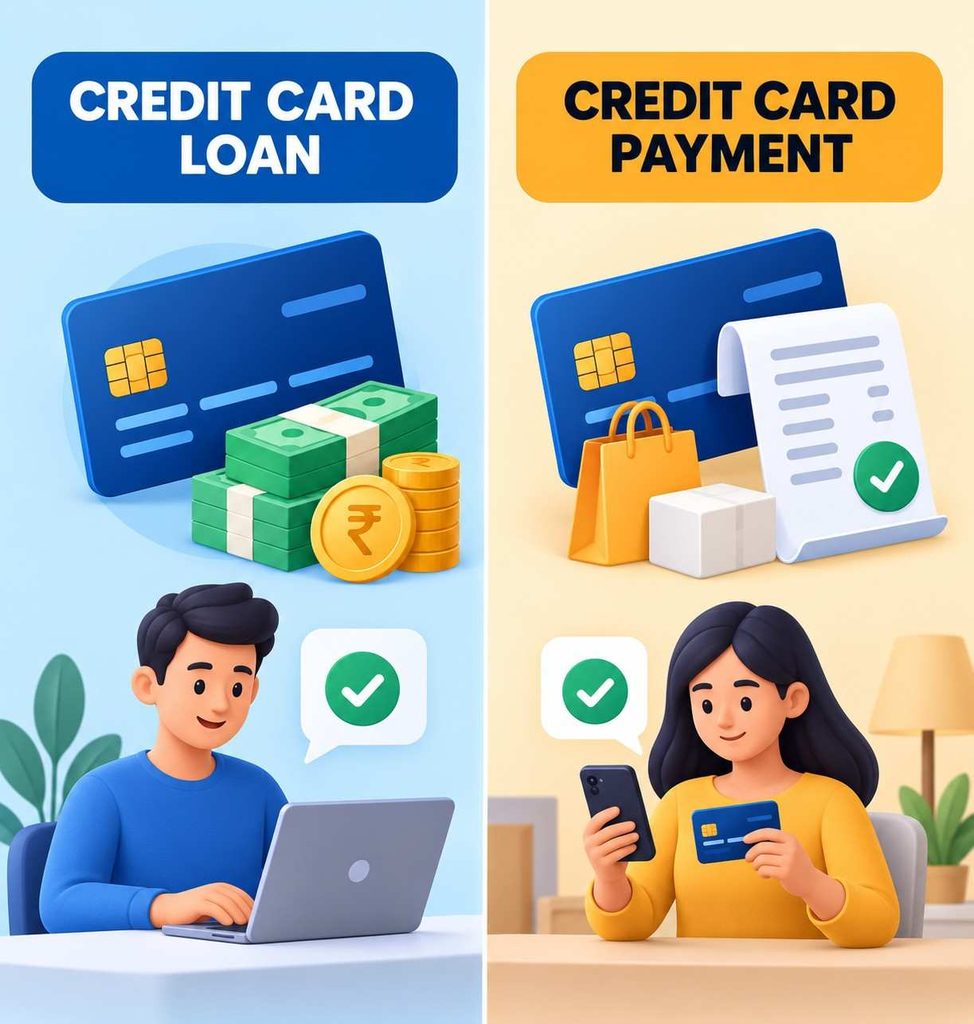
A credit card loan, on the other hand, is a separate lending product where the bank gives you actual cash or converts a purchase into fixed EMIs, repaid over a set tenure with interest.
If you are managing your monthly card payments through digital wallets or bank apps, it helps to understand how credit card payment apps work, since the repayment discipline you follow there directly affects your credit card loan eligibility and the interest rate offered to you.
Types of Credit Card Loans
Not all credit card loans work the same way. Banks typically offer three variants.
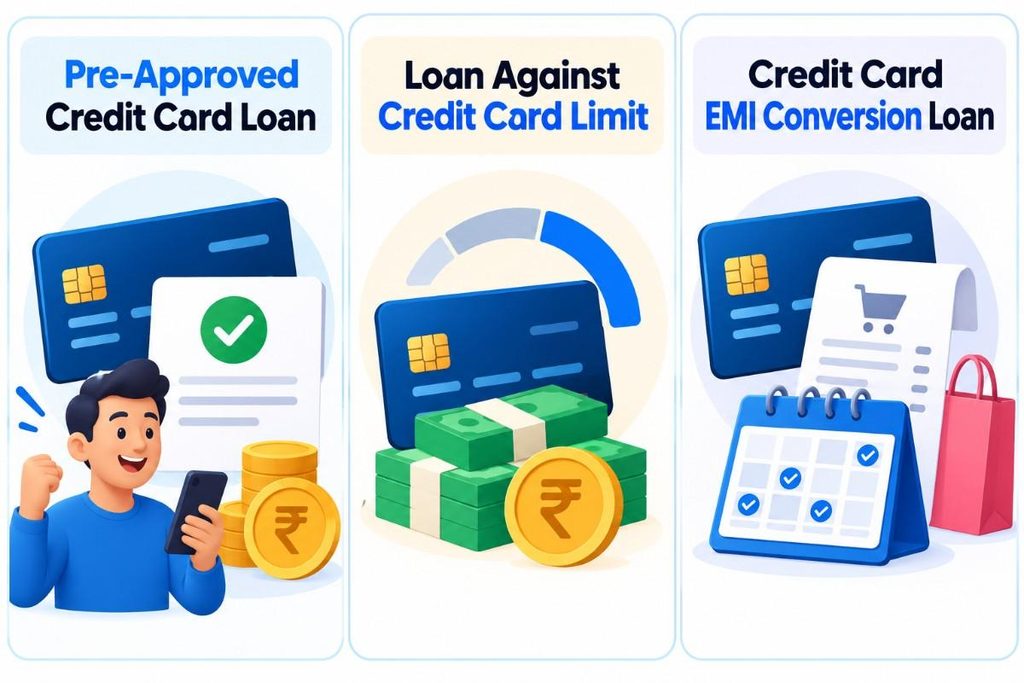
Let’s look at each one by one.
Pre-Approved Credit Card Loan
This is offered automatically to existing cardholders with a good repayment history. The bank shows you a ready amount, interest rate, and tenure in the app, and you simply accept the offer to get funds disbursed.
Loan Against Credit Card Limit
Here, the loan amount is carved directly out of your available credit limit rather than being a separate sanction. Your shopping limit is temporarily reduced by the loan amount until you start repaying.
It is useful to keep track of this by learning how to check your credit card balance regularly, so you know exactly how much spending room you have left after taking the loan.
Credit Card EMI Conversion Loan
This converts a large purchase, such as electronics or travel bookings, into fixed monthly instalments right at the point of sale or afterward from your statement.
It usually carries a lower interest rate than the regular finance charge on unpaid credit card dues, along with a small conversion fee.
Features of a Credit Card Loan
Here’s what sets a credit card loan apart from other borrowing options in terms of structure and convenience:
- Pre-approved for existing cardholders, so approval is fast, often instant
- No collateral or guarantor required since it is an unsecured facility
- Flexible tenure ranging from 3 months to 60 months depending on the bank and scheme
- Loan amount is adjusted within your existing credit limit
- EMIs reflect directly on your credit card statement or are debited from your linked bank account
- Minimal to zero fresh documentation for existing customers
Advantages and Disadvantages of a Credit Card Loan
Like any borrowing option, this comes with real trade-offs that are worth weighing before you apply.
Advantages of a Credit Card Loan
- Quick disbursal, often within minutes for pre-approved offers
- No need for fresh income proof or collateral
- Lower interest rate than regular credit card revolving debt
- Flexible repayment tenure to match your cash flow
To understand the broader benefits a credit card itself offers beyond just loans, it is worth reading about the key advantages of a credit card, which explain how responsible usage builds the credit profile that makes such loans available in the first place.
Disadvantages of a Credit Card Loan
- Reduces your available credit limit for regular spending until repaid
- Interest rates, while lower than revolving credit card debt, can still be higher than a standard personal loan for some banks
- Missing an EMI attracts late payment charges that are steeper than on regular loans
- Prepayment or foreclosure charges may apply if you want to close it early
Credit Card Loan vs Personal Loan: Which Should You Choose?
Since both are unsecured borrowing options, readers often compare a credit card loan with a regular personal loan before deciding.
| Criteria | Credit Card Loan | Personal Loan |
|---|---|---|
| Approval Speed | Instant to a few hours, pre-approved for existing cardholders | 1 to 3 days, even with a good credit score |
| Documentation | Minimal, often none for existing customers | Fresh income proof, bank statements, ID and address proof |
| Loan Amount | Limited to your available credit card limit | Usually higher, based on income and repayment capacity |
| Interest Rate | Starts lower for pre-approved offers, but varies widely by bank | Often competitive, especially with a strong credit profile |
| Tenure | Typically 3 to 60 months | Usually up to 60 to 84 months depending on the lender |
| Impact on Credit Limit | Reduces available card limit until repaid | No impact on credit card limit |
A credit card loan wins on speed and paperwork since it is pre-approved and disbursed almost instantly. A personal loan through a bank or a dedicated lending platform can offer a larger loan amount and, in many cases, a lower interest rate, but takes longer due to fresh documentation and verification.
If you want to compare interest rates, eligibility, and processing timelines across different lending options and loan apps before choosing, Loan Apps provides detailed, India-focused breakdowns of various loan apps and their terms, which can help you decide whether a credit card loan or a separate personal loan app suits your needs better.
Conclusion: A Credit Card Loan turns your Existing Limit into Quick & Structured borrowing
A credit card loan works best when you need funds fast and already have a card with a healthy limit and clean repayment history. It saves you the paperwork of a fresh loan application, but the convenience comes at a cost if EMIs are missed.
Compare the interest rate, processing fee, and foreclosure charges across banks first, then borrow only what fits comfortably within your monthly budget.
FAQs
No. Cash withdrawal, also called a cash advance, charges interest from day one with no interest-free period, while a credit card loan comes with a fixed tenure, a defined interest rate, and an EMI structure from the start.
It depends on the bank’s policy and your available credit limit. Some banks allow it if enough limit remains, while others may restrict new loans until existing dues are cleared.
Yes, it is reported to credit bureaus like any other loan. Timely repayment improves your score, while missed EMIs can lower it and affect future loan approvals.
Most banks allow foreclosure, usually with a charge of around 3% of the outstanding principal, so check the exact terms before applying if early closure is a possibility.
Yes, GST is applicable on processing fees and other charges associated with the loan, in addition to the stated interest rate.