

A debit card allows you to spend only the money available in your bank account. Transactions are deducted instantly, so there’s no borrowing or interest involved.
A credit card, on the other hand, lets you borrow money from the bank up to a preset limit. You can pay later, often with interest if the balance isn’t cleared on time.
This article explains the difference between debit and credit cards, how they work in India, when to use each, and tips to use them safely.
Credit Card vs Debit Card: Overview
Before going into detailed explanations, this table gives a quick, side-by-side view of how credit cards and debit cards differ in everyday Indian usage, costs, control, and risk.
| Aspect | Debit Card | Credit Card |
|---|---|---|
| Source of money | Directly from your bank account | Borrowed money from the bank |
| Spending limit | Limited to the available account balance | Limited by the assigned credit limit |
| Interest charges | No interest involved | High interest if the bill is not paid in full |
| Payment timing | Money deducted immediately | Payment is due later, as per the billing cycle |
| Impact on credit score | No impact | Can improve or damage a credit score |
| Risk of overspending | A low balance restricts spending | Higher, due to delayed payment |
| Fees and charges | Low, mostly ATM or annual fees | Higher, includes interest and penalties |
| EMI options | Not available | Available for large purchases |
| Best suited for | Daily spending and control | Planned spending and flexibility |
What Is A Debit Card and How Does It Work
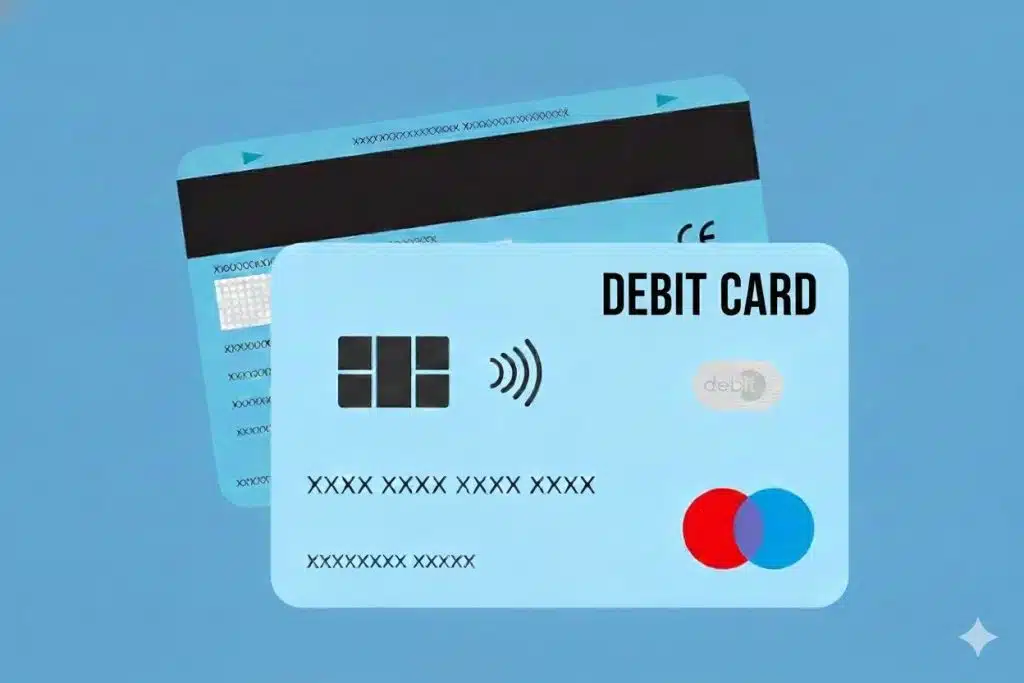
A debit card is directly linked to your savings or current account. When you use it, the money is deducted from your account immediately or within a short settlement window.
There is no borrowing involved. When you use a debit card, the process works like this:
- You swipe, tap, or enter your debit card details
- The merchant sends a payment request
- Your bank checks whether your account has enough balance
- If sufficient, the transaction is approved, and the amount is deducted
- If insufficient, the transaction fails or may trigger an overdraft fee
Debit cards give a sense of control and predictability since money leaves the account immediately, appealing to users who want clarity and no future payment obligations.
In India, they are commonly used for ATM withdrawals, fuel, groceries, and local merchant payments. Often linked to salary or government accounts, debit cards are the first financial tool many users receive.
Working directly with bank balances, they reflect income patterns. Low balances naturally limit spending, helping households avoid overspending and manage money effectively.
What Is A Credit Card and How Does It Work
A credit card allows you to borrow money from the card issuer up to a fixed credit limit. Instead of using your own funds, you are temporarily using the bank’s money.
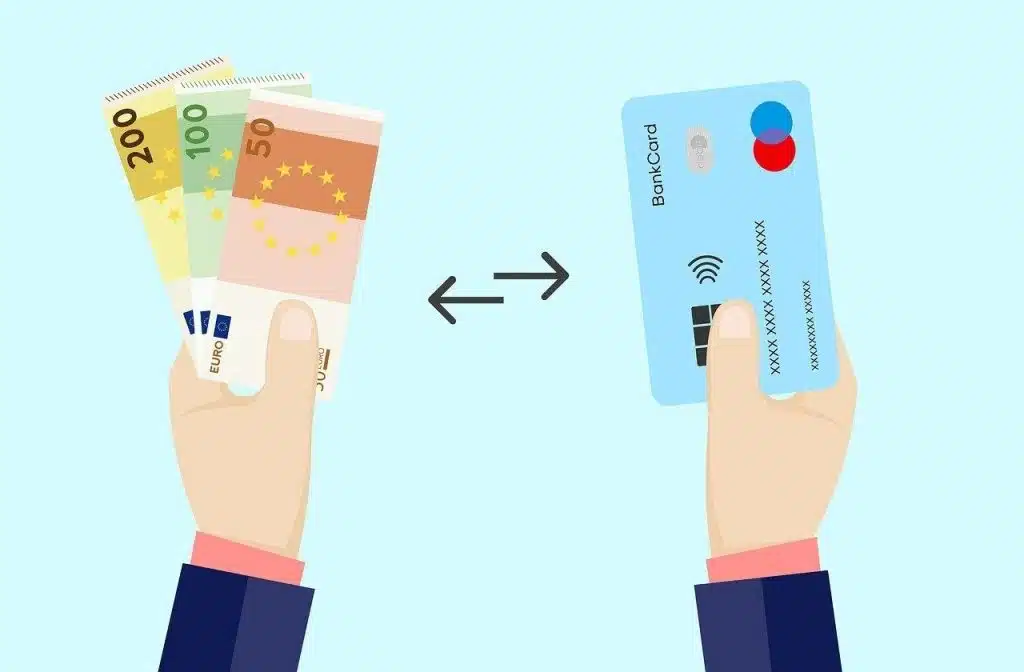
Each transaction adds to your outstanding balance. At the end of the billing cycle, the bank generates a statement, and the billed amount must be repaid by the due date.
Credit Card borrowing works as follows.
- The credit limit is set based on your income, credit history, and relationship with the bank.
- Purchases can be made within this limit without immediate payment
- No money leaves your bank account at the time of purchase, which makes spending feel less immediate
Credit cards offer delayed payments, which provide flexibility but can lead to overspending if not used carefully. Each billing cycle typically lasts around 30 days, followed by a 20- to 45-day grace period during which you can pay the full amount without incurring interest.
If the balance is not cleared within this window, interest is applied, and credit cards in India charge some of the highest rates in retail lending. This makes timely payments crucial to avoid costly debt.
Additional costs and long-term impact include the following pointers.
- Purchases can be converted into EMIs, often with processing fees and interest.
- Paying only the minimum due allows interest to compound and can lead to long-term debt.
- All credit card activity is reported to credit bureaus
Timely repayments help build credit scores, while late payments or high utilisation can damage them quickly.
Key Difference Between Credit Card and Debit Card
The key difference between a credit card and a debit card is whose money you are spending.
A debit card uses your own bank balance, while a credit card lets you spend money borrowed from the bank.
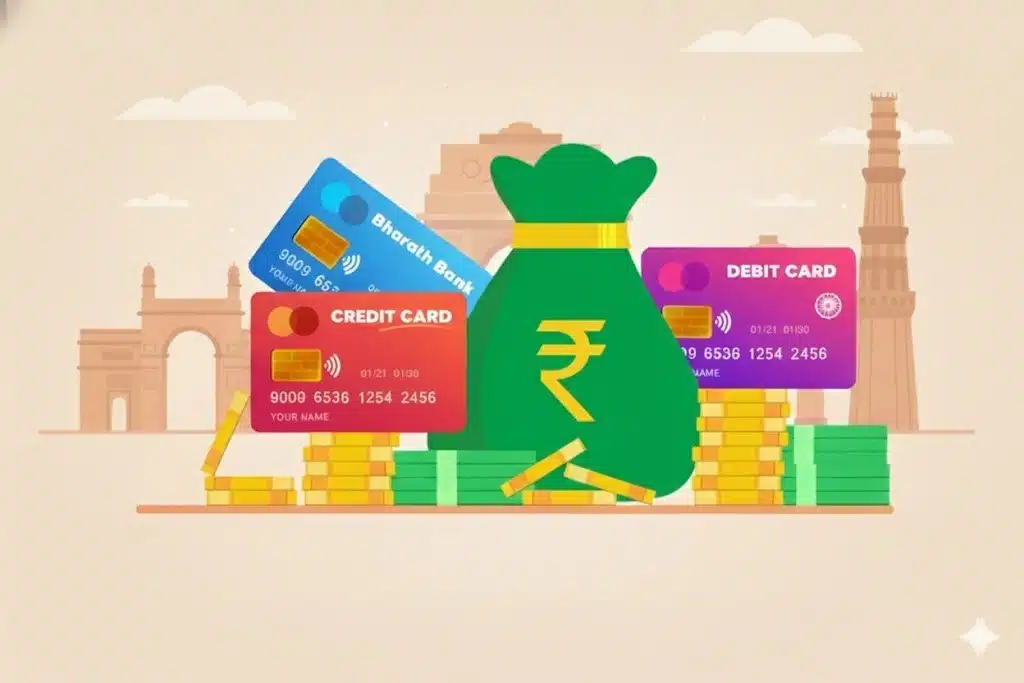
With a debit card, every swipe reduces your balance immediately, making spending feel real. With a credit card, payment is delayed, so the cost feels less immediate.
Debit cards are straightforward with no interest or repayment cycles. Credit cards add statements, due dates, and penalties, offering flexibility but demanding self-discipline.
Debit Card vs Credit Card: Fees, Charges, and Real Costs In India
Many people think debit cards are free and credit cards are expensive, but the reality is more nuanced. Both have costs; they just appear in different ways.
Costs Associated with Debit Cards:
- Debit cards usually come with savings accounts, but they are not always free. Some banks charge annual maintenance fees.
- Free ATM withdrawals are often limited, and extra withdrawals incur small charges.
- Additional fees may apply for international use, card replacement, or SMS alerts.
- Indirect costs include limited long-term benefits: debit cards do not build credit history and rarely offer meaningful rewards.
Costs Associated with Credit Cards:
- Credit cards carry higher risks. Interest on unpaid balances in India is very high, and missing a payment even once can lead to rapidly accumulating interest.
- Other charges may include annual fees, late payment penalties, cash withdrawal fees, and foreign transaction fees.
- EMI options provide convenience, but they usually involve processing fees and interest, even when advertised as simple or “easy.”
Debit Card vs Credit Card: Which Is Better
There is no universal winner. The better card depends on how you earn, spend, and repay money.

Debit cards work best when control matters most. You spend only what you have, which naturally limits overspending. They suit beginners, budget-focused users, and anyone uncomfortable with future bills.
Credit cards work best when timing is understood. You are not paying now, but you are committing to pay later. Used well, this delay helps with cash flow, rewards, and credit building. Used carelessly, it leads to debt.
Most financially stable users do not choose one over the other. They use each where it makes sense.
Related Reads:
Conclusion: Credit Cards Borrow Money, While Debit Cards Spend Your Own Funds
Debit cards and credit cards do the same job on the surface, but they change how you spend behind the scenes.
One keeps you tied to the money you already have. The other gives you room to spend now and think about payment later. Neither is good nor bad on its own.
It comes down to how you use them. Keep debit cards for control. Use credit cards carefully for flexibility. When used with awareness, both can work together without creating money stress.
FAQs
No. Debit card spending is not tracked, so it doesn’t help or hurt your credit score.
Usually, yes. If something goes wrong, credit cards make it easier to raise a dispute and get your money back.
Yes, but only if you pay the full bill on time. Miss payments or overspend, and it can backfire.
Not right away. Start with a debit card. Add a credit card later, once spending habits are under control.
No. Pay the full bill before the due date, and there’s no interest.
Yes. Many people use debit cards for daily spending and credit cards only when they really need them.