

Today, carrying cash or physical cards around can feel out of date and inconvenient. A digital wallet (also known as an e-wallet) lets you store your credit/debit cards, bank accounts, and payment information on your smartphone, smartwatch, or other device, enabling you to make quick, secure payments from anywhere.
These wallets protect your money and data using modern technology such as encryption, tokenization, and biometric authentication. From scanning QR codes in stores to paying bills online, digital wallets are changing the way we manage money by combining convenience, speed, and security in a single, innovative piece of software.
Understanding A Digital Wallet
A digital wallet is a software application that stores your payment methods, including credit and debit cards and bank accounts. It enables you to make purchases without carrying a physical wallet, providing ease and speed for online and in-store transactions.
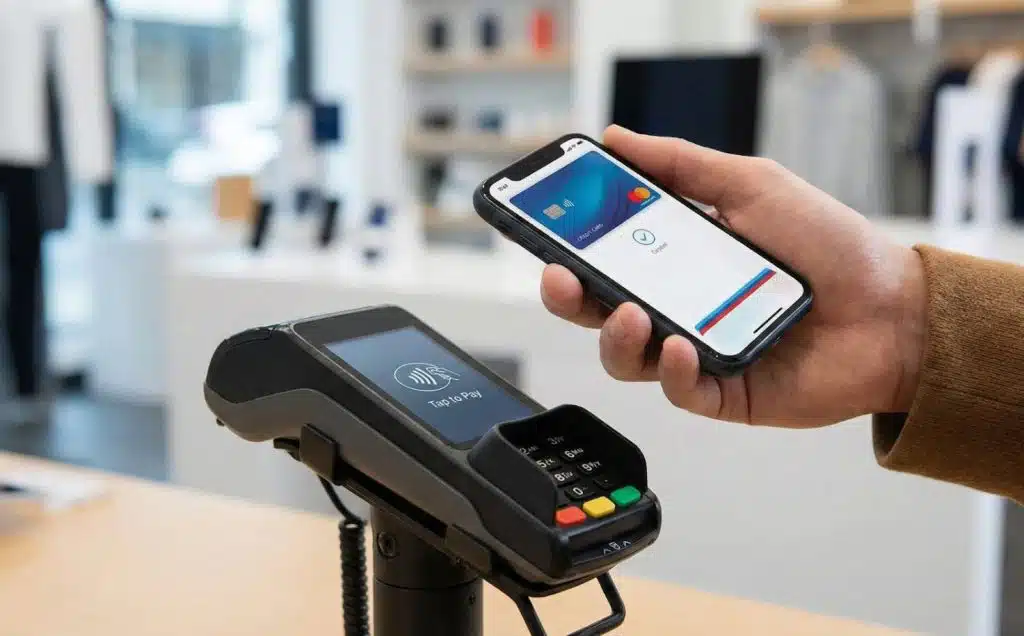
Tokenization is used in modern digital wallets to replace your real card information with a temporary digital code when making a payment. This keeps your critical data hidden from retailers and hackers, providing an additional layer of security while shopping.
How Digital Wallet Works
When making a payment, digital wallets frequently use Near Field Communication (NFC) for tap-to-pay or QR codes for checkout scanning. You authorize the transaction with a PIN, fingerprint, or facial ID, ensuring that only you can make the payment.
Once authorized, the wallet transmits an encrypted and tokenized code to the payment network. The network verifies the token, confirms the transaction, and completes your payment – all without disclosing your actual card information, resulting in security and ease.
How To Set Up A Digital Wallet?
Setting up a digital wallet is simple on both Android and iOS smartphones. Once installed, it can securely store credit cards, loyalty points, and tickets, allowing you to pay with a simple tap.
Steps to Set Up a Digital Wallet:
- Choose and Download a Wallet App
IOS: Download apps like Google Pay from the App Store.
Android: Download apps like Google Pay and Samsung Pay from the Google Play Store. - Install and open the app: Follow the on-screen instructions and allow the necessary permissions.
- Add payment methods: Link your credit/debit cards and bank accounts. Verification may include an OTP or scanning of your cards.
- Enable Security Features: Set up a PIN, fingerprint, or facial ID so that only you can authorize payments.
- Add Extra Features (Optional): Include loyalty cards, tickets, or IDs for added convenience.
- Test Your Wallet: Make a small purchase, either online or in-store, to ensure everything works.
Types Of Digital Wallet
Digital wallets come in a variety of forms, each tailored to certain payment requirements. Some are limited to a specific business, while others allow for more general use, such as shopping, money transfers, and even cryptocurrency transactions. Understanding the many types of wallets helps you choose the one that best suits your lifestyle and payment patterns.
- Closed Wallets: A closed wallet is associated with a specific merchant or company. You can only use it to make purchases from that merchant, not to withdraw cash. Examples include store-specific wallets such as Amazon Pay Balance and retailer apps.
- Semi-Closed Wallets: Semi-closed wallets enable you to shop at different merchants, but cannot be used for direct cash withdrawals. They frequently facilitate online and offline transactions at partner stores. Examples include Paytm Wallet and MobiKwik.
- Open Wallets: Open wallets are linked to your bank account and allow you to make purchases both online and offline and withdraw cash from an ATM. They provide the most flexibility and work similarly to a digital bank account. PayPal and Skrill are some examples.
- Mobile Wallets: Mobile wallets are smartphone apps that hold payment credentials and enable contactless payments via NFC, QR codes, or UPI. Examples include Google Pay and Paytm.
- Cryptocurrency Wallets: These wallets store digital currencies such as Bitcoin, Ethereum, and other tokens. They safeguard funds using private keys and blockchain technology, allowing for cryptocurrency transfers and payments. Examples include the Coinbase Wallet and MetaMask.
Pros and Cons Of Digital Wallet: Are They Safe and Reliable?
Here are some pros and cons of digital wallets:
| Pros | Cons / Risks |
|---|---|
| Convenient & fast payments | Requires internet access |
| Reduces the need to carry cash | Potential security threats |
| Tracks spending automatically | Can be device-dependent |
| Stores multiple cards & IDs | Some merchants may not accept it |
Is Digital Wallet Safe To Use? (Concerns & Tips)
Digital wallets are generally secure, with encryption, tokenization, and biometric verification protecting your money and data. They facilitate payments and minimize the need for cash, but, as with any digital instrument, they are vulnerable to hackers, phishing, and unauthorized access, so users must exercise caution when using them.
Safety Concerns
- If your phone is lost or stolen and does not have a strong password/lock (PIN, fingerprint, etc.), someone could access your wallet and make unauthorized payments.
- Fake wallet apps or phishing scams can fool users into handing over login information, exposing their wallets.
- If you utilize public or unsecured Wi-Fi networks to pay or log in, hackers may gain access to your transaction data.
- Malware or obsolete software on your device can allow fraudsters to abuse the wallet.
Tips To Use Digital Wallet Safely
- Enable strong authentication by using complicated passwords, biometrics, or two-factor authentication (2FA) whenever possible.
- Before installing wallet apps, download them only from trusted sources (legitimate app stores) and verify the developer’s credentials.
- Keep your phone and wallet apps up to date – upgrades frequently fix security flaws.
- Avoid using public Wi-Fi when making payments or signing in; instead, use a secure network or a VPN.
- Check your transaction history regularly. If you notice anything questionable, please report it immediately.
What Is The Safest Digital Wallet? (Top Digital Wallet Apps 2025)
Out of all the digital wallets, here are some of the safest one to choose in India.
1. Phonepe
| Attribute | Detail |
|---|---|
| Founded / Backing | Originally by PhonePe‑Flipkart, backed by Walmart. |
| Core Use | UPI payments, bill recharges, money transfers, merchant payments, investments & more. |
| Security Features | Biometric/PIN lock, device binding, real‑time fraud detection & encryption. |
In 2025, PhonePe is India’s top UPI wallet, with millions of users relying on it for daily transactions.

Its dashboard remains sleek, and the app accepts anything from simple QR payments to bills, recharges, and even investments. PhonePe’s biometric login or UPI PIN, combined with bank-grade encryption, strikes a good mix between security and convenience.
PhonePe is a solid, dependable option for users who want a single app for all of their payment needs, from small supermarket purchases to large expenditures. Its widespread merchant acceptance throughout India makes it worthwhile practically anywhere.
2. Google Pay (GPay)
| Attribute | Detail |
|---|---|
| Developed By | Google — global infrastructure & backing. |
| Core Use | UPI payments, peer‑to‑peer transfers, bill payments, rewards & offers. |
| Security Features | End-to-end encryption, biometric/PIN authentication, and AI‑based fraud detection. |
Google Pay stands out due to its simple interface and ease of use. Whether you’re splitting a bill with pals or paying at a business, GPay’s UPI-based transactions are quick and dependable.

Google’s global security architecture, along with encryption and fraud protection measures, instills confidence in individuals concerned about their safety.
If you value simplicity, quickness, and trustworthiness, Google Pay is an excellent choice for digital payments, particularly on Android.
3. Paytm
| Attribute | Detail |
|---|---|
| Type | Hybrid: Wallet + UPI + Payment Services. |
| Core Use | Wallet payments, UPI transfers, bill payments, ticket bookings, recharges, metro payments, etc. |
| Security Features | Encryption, OTP‑verification, app lock, and in‑app risk engine. |
Paytm is a popular digital wallet in India that supports both traditional wallet-style payments and UPI. This hybrid payment method allows customers to make both wallet-balance payments and bank-linked UPI transfers, providing greater flexibility.

The software uses encryption, OTP verification, and built-in security mechanisms to safeguard transactions and account data.
Paytm is an all-in-one option for those looking for a versatile wallet that can handle payments, recharges, tickets, and more.
4. BHIM UPI
| Attribute | Detail |
|---|---|
| Developer / Backing | National Payments Corporation of India (NPCI) is the official UPI operator. |
| Core Use | Bank-to-bank UPI transfers and QR code payments are simple and direct. |
| Security Features | Minimal permissions, direct bank transfers (no middle‑party wallet), simple interface. |
BHIM UPI distinguishes out for being official, government-backed, and free of unnecessary features. Because it uses direct bank transfers rather than maintaining wallet balances, it eliminates reliance on third-party wallet infrastructure, potentially reducing security and privacy risks.

Its simple design and limited permissions make it simple and generally safe for basic transfers or payments.
BHIM UPI is a secure, no-frills option for customers who prefer minimalism, without wallet balance systems or extra features.
5. Amazon Pay UPI
| Attribute | Detail |
|---|---|
| Backing | Part of the Amazon ecosystem is helpful for shoppers and frequent online buyers. |
| Core Use | UPI payments, bill payments, recharge, Amazon orders checkout, cashback & offers. |
| Security Features | Multi‑layer security: OTP, encryption, transaction alerts & Amazon’s infrastructure reliability. |
Amazon Pay UPI integrates payment ease directly into the Amazon shopping ecosystem, ideal for customers who frequently order online. Using UPI allows for secure bank-linked transactions instead of a separate wallet balance.

Built-in encryption, OTP-based verification, and real-time transaction alerts protect your payments and account.
If you primarily use digital payments for online shopping and want a smooth checkout, security, and convenience, Amazon Pay makes life easier.
How To Choose The Right Digital Wallet
Choosing the best digital wallet is determined by your payment habits, convenience, and security preferences. Different wallets have different functions, so choose one that suits your lifestyle – whether you primarily pay bills, shop online, or send money to friends.
| Feature | Why It Matters |
|---|---|
| Security & Encryption | Protects your money and personal info |
| Compatibility | Works with your devices and preferred stores |
| Fees | Avoid hidden charges |
| Supported Payment Types | Credit, debit, crypto, tickets, loyalty cards |
| Ease of Use | Smooth user experience encourages adoption |
1. Security & Encryption
Your wallet should include bank-level encryption, tokenization, and biometric/PIN authentication. Some wallets additionally have fraud detection technologies and real-time warnings to help prevent unwanted transactions.
2. Compatibility
Check whether the wallet is compatible with your smartphone, tablet, or wearable device, and whether it integrates with the stores, apps, or payment systems you most frequently use. Some wallets are platform-specific (Android or iOS only); therefore, device compatibility is vital.
3. Fees
Some wallets impose transaction, maintenance, and withdrawal fees and limits. Choose one with clear charges and low rates for frequent use, especially if you intend to use it for both small and large transactions.
4. Supported Payment Types
A good wallet should support UPI, credit/debit cards, bank transfers, digital tickets, loyalty points, and even cryptocurrency. Multi-purpose wallets eliminate the need to move between apps for various transactions.
5. Ease of Use
A smooth and intuitive interface avoids errors and encourages frequent use. One-tap payments, QR code scanning, and auto bill pay can improve your experience.
Conclusion – Digital Wallets
A digital wallet is a secure and convenient tool that digitally keeps your credit cards, bank accounts, and payment information, enabling quick, cashless transactions.
It protects your money and data through encryption, tokenization, and biometric authentication. Understanding its varieties, features, and security measures helps you choose the best wallet to simplify payments and manage finances in today’s digital world.
FAQs
Some digital wallets, such as closed or semi-closed wallets, allow you to store money and pay merchants without associating your bank account. However, for UPI-based or open wallets to function correctly, a bank account is usually necessary.
Tokenization is used in digital wallets to replace genuine card details with temporary numbers during transactions. Combined with encryption and biometric authentication, this protects your sensitive information from hackers and retailers.
No. Closed wallets function solely with specific merchants, semi-closed wallets with partner retailers. In contrast, open wallets and large UPI wallets such as PhonePe or Google Pay are generally accepted across the country.
Yes. Mobile wallets featuring NFC, QR codes, or UPI integration allow you to pay in both physical and online stores, making them valid for everyday purchases.
Immediately lock your wallet or bank account, notify the wallet provider, and change your passwords or PINs. Regular transaction monitoring also aids in the early detection of fraudulent behavior.