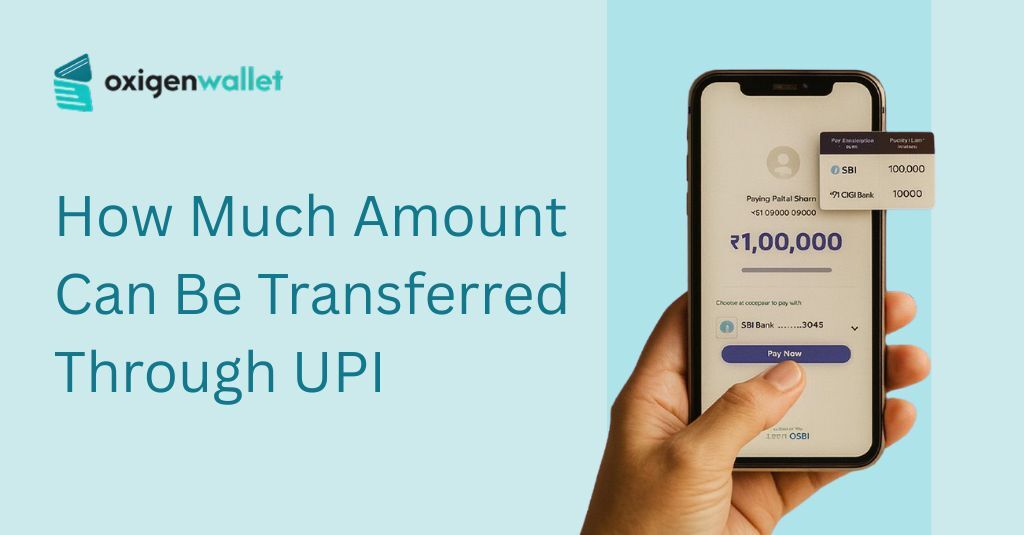


You can send up to ₹1,00,000 per transaction through regular UPI payments, with a daily limit of ₹1,00,000 for most person-to-person transfers.
However, certain types like capital markets, insurance, and IPO applications allow higher limits of ₹2,00,000 to ₹5,00,000 per transaction.
As of January 2026, 691 banks support UPI, processing 21,703.44 million transactions monthly according to NPCI data.
This guide breaks down exactly what you can send, when banks might block your payment, and how to work around daily limits without stress.
UPI Transaction Limits: Standard And Special Types
The highest UPI transaction limit depends on what you are paying for, not just how much you want to send. Although NPCI sets the basic rules, your bank decides the final limit.
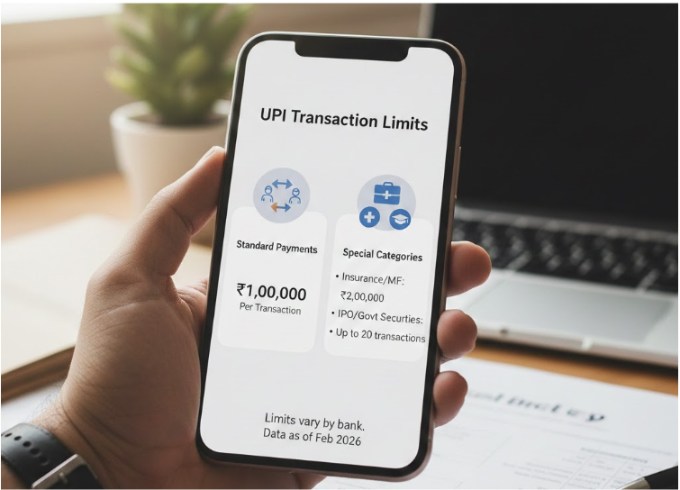
For regular payments between friends or merchants, you are limited to ₹1,00,000 per transaction.
Special use cases get more room:
- ₹2,00,000 for insurance premiums or mutual fund investments.
- ₹5,00,000 for IPO applications or government securities through RBI Retail Direct.
- Up to 20 UPI transactions per day (most banks set lower daily totals).
Here are the UPI per-transaction limits by type:
| UPI Transaction Type | Per-Transaction Limit |
|---|---|
| Normal UPI transfers (P2P / P2M) | ₹1,00,000 |
| Capital Markets, Insurance, Collections, Foreign Inward Remittances | ₹2,00,000 |
| IPO Applications (ASBA via UPI) | ₹5,00,000 |
| RBI Retail Direct Scheme | ₹5,00,000 |
| UPI 123Pay (Feature Phone) | ₹5,000 |
| UPI Lite | ₹1,000 |
Source: NPCI
UPI Lite is built for speed. It lets you store up to ₹5,000 in your wallet, with each payment limited to ₹1,000. Your daily usage cannot exceed ₹10,000. Payments clear instantly without needing a PIN or OTP for small transactions.
Bank-Wise UPI Limits: Daily And Per Transaction
Your bank’s internal policy often matters more than NPCI’s official limit. Even if NPCI allows ₹1 lakh per transaction, your bank might stop you at ₹50,000 based on account type or KYC status.
Below are the bank-wise daily and per-transaction limits.
| Bank | Per-Transaction Limit | Daily Limit |
|---|---|---|
| SBI | ₹1,00,000 | ₹1,00,000 |
| HDFC Bank | ₹1,00,000 | ₹1,00,000 |
| ICICI Bank | ₹1,00,000 | ₹1,00,000 |
| Axis Bank | ₹1,00,000 | ₹1,00,000 |
Source: Google Pay Help
Banks use risk calculations to set these limits. Newer accounts usually have tighter limits than older accounts with more transaction history. Some banks combine your per-transaction and daily limits into one total.
So if you send ₹10,000 to ten different friends during the day, you hit your ₹1,00,000 daily limit, same as sending ₹1,00,000 in one go.
UPI AFA Waiver and Full Delegation Limits
Additional Factor Authentication (AFA) is the PIN or OTP you enter before a payment goes through. NPCI removes this requirement for smaller amounts to speed up checkout, but the waiver limit varies by type.
Check the AFA waiver limits from NPCI:
| Category | AFA Waiver Limit |
|---|---|
| All merchant categories (default) | ₹15,000 |
| Mutual Funds | ₹1,00,000 |
| Credit Card Bill Payments | ₹1,00,000 |
| Insurance Payments | ₹1,00,000 |
Source: NPCI
You can pay ₹14,999 without a PIN; for payments of ₹15,000 or more, verification is required. For repeat payments like SIPs or insurance premiums, the waiver increases to ₹1,00,000, letting you automate larger bills.
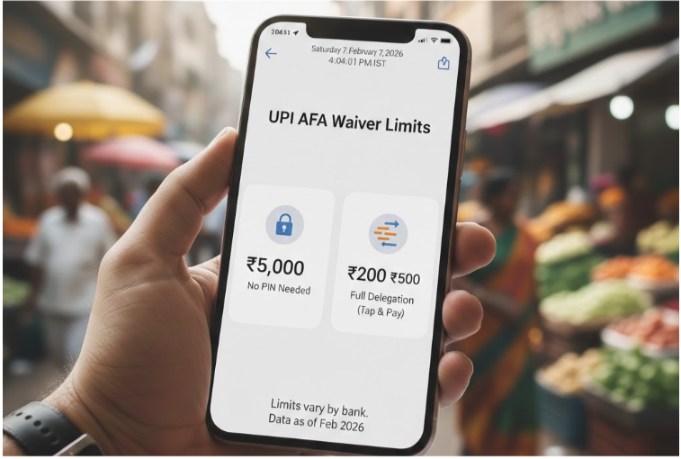
The Full Delegation feature lets you authorize a family member to spend from your account. They get a monthly limit of ₹15,000, which you control through app settings.
UPI 123Pay (Feature Phone) Limits
UPI 123Pay serves users without smartphones. It works via IVR, app-based flows, or missed-call systems.
Each transaction tops out at ₹5,000, with a daily total of ₹1,00,000. This channel works separately from regular UPI apps, so your PhonePe or Google Pay limits stay unaffected.
Source: NPCI
Can UPI Limits Be Increased?
You cannot increase UPI limits beyond what your bank allows. Your bank controls the final limit, not NPCI. Check your UPI app’s settings. Many banks let you adjust daily limits within their allowed range.
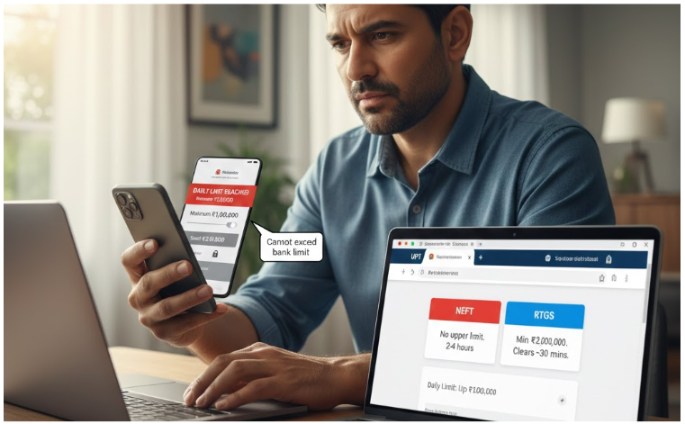
If you need to send ₹2,00,000 for a property token or medical emergency, UPI will not support it in one go. Switch to NEFT (no upper limit, takes 2 to 4 hours) or RTGS (minimum ₹2,00,000, clears within 30 minutes).
The new UPI Payment Rules for 2026 tighten merchant onboarding KYC but do not change consumer transaction limits.
Related reads:
Conclusion: ₹1 Lakh to ₹5 Lakh Can Be Sent Through UPI
Regular UPI transfers stop at ₹1,00,000, but the limit rises to ₹5,00,000 for IPOs, hospitals, and government schemes.
Your actual limit depends on three things: your bank’s policy, transaction type, and your account’s risk profile. For amounts beyond UPI’s reach, NEFT and RTGS remain your backup options.
Always check your bank’s specific limits in-app before starting large payments to avoid failed transactions and locked funds.
FAQs
Yes, but only for specific types like capital markets, insurance, or collections. Regular P2P transfers remain limited to ₹1,00,000 per transaction.
Most banks set a ₹1,00,000 daily limit for regular transfers. Special types like IPOs allow up to ₹5,00,000 per transaction daily.
Google Pay follows NPCI rules. You can send ₹2,00,000 only for insurance, capital markets, or foreign remittances, not for peer-to-peer payments.
Google Pay’s daily limit matches your bank’s policy, typically ₹1,00,000 for regular transfers. Check in-app settings to confirm your current limit.
SBI allows ₹1,00,000 per transaction and ₹1,00,000 daily for regular UPI payments. Higher limits apply to IPO applications and capital market transactions.