

Digital payments come with both advantages and limitations around speed, security, and accessibility. Cash is declining as more people find digital options convenient for daily transactions.
For the full calendar year 2025, UPI clocked 228.3 billion transactions with a total value of ₹299.7 lakh crore.
This guide explains the practical aspects of digital payment, what works well, and what you should know before relying on it completely.
Top 10 Benefits Of Digital Payment In India
Here are ten commonly cited benefits that have contributed to this adoption, though individual experience may vary based on location and circumstances.
1. Instant Money Transfer (24×7)
You can send money to anyone with a bank account within seconds, any time of day. Traditional methods like cheques took several days to clear. Digital transfers work on holidays and weekends when banks are closed.
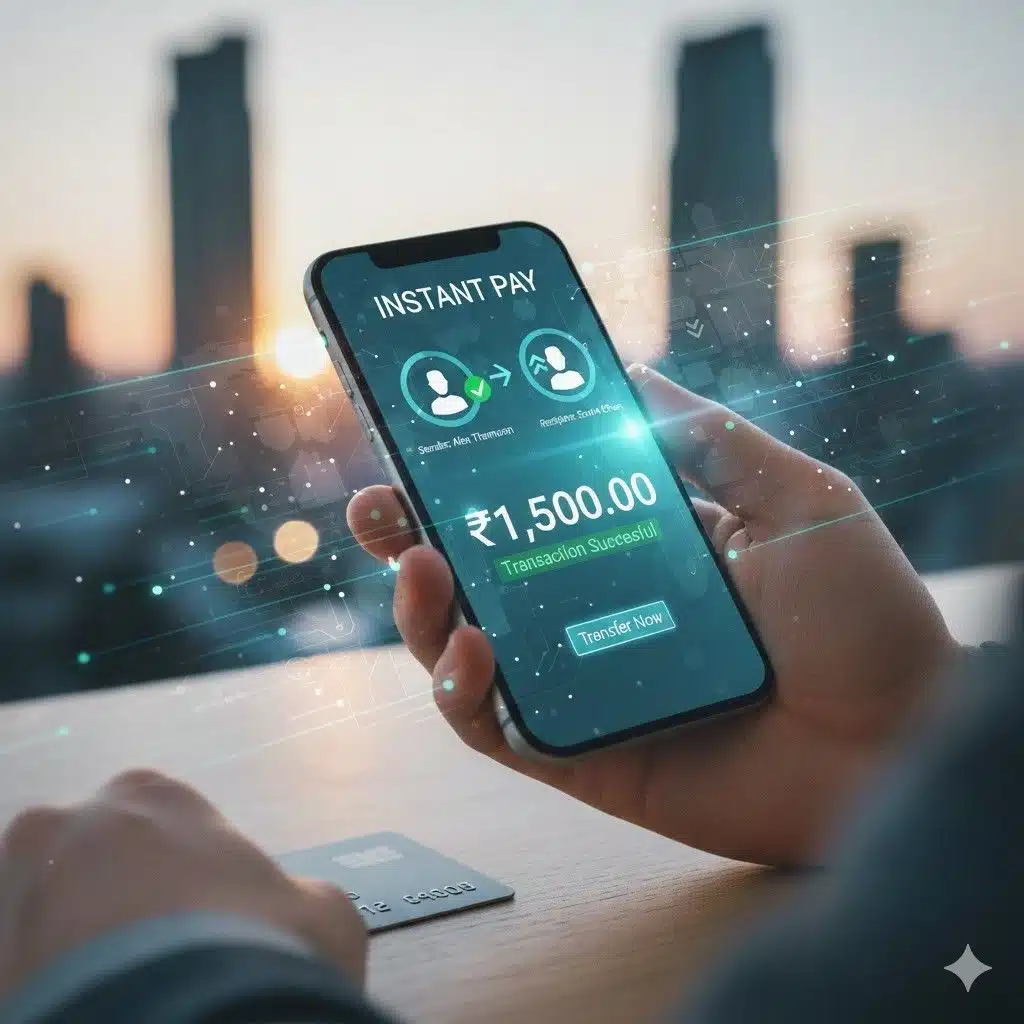
This works well for urgent situations, such as splitting bills, emergency payments, or quick reimbursements. However, the speed only helps if both sender and receiver have accounts and internet access.
2. Zero Risk Of Cash Theft or Loss
Digital money stays in your bank account rather than your pocket. If your wallet gets stolen, you lose the cash inside. With digital payments, even if your phone is stolen, your money stays protected by passwords.
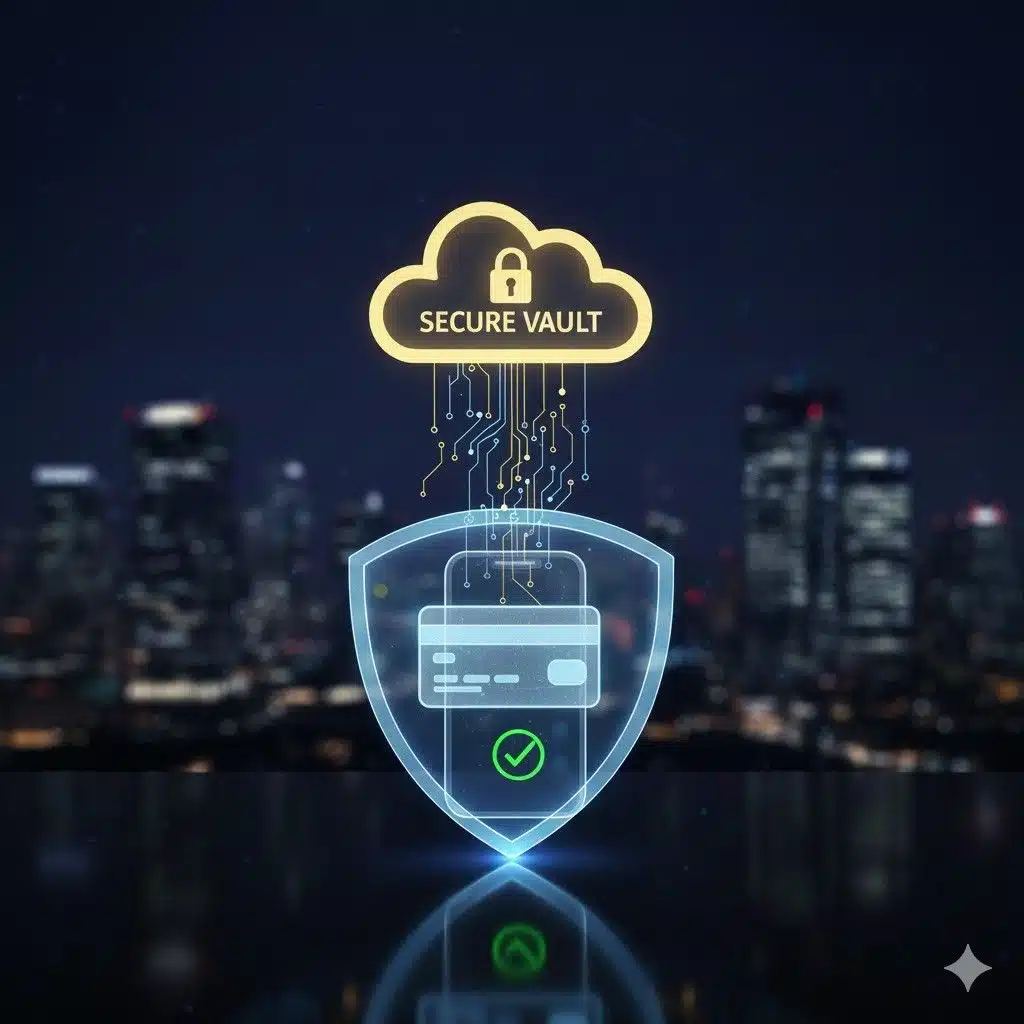
That said, cyber fraud exists people do lose money through phishing scams or sharing OTPs. The risk shifts from physical theft to digital fraud, which requires different precautions. Neither system is completely risk-free.
3. No Need To Carry Change
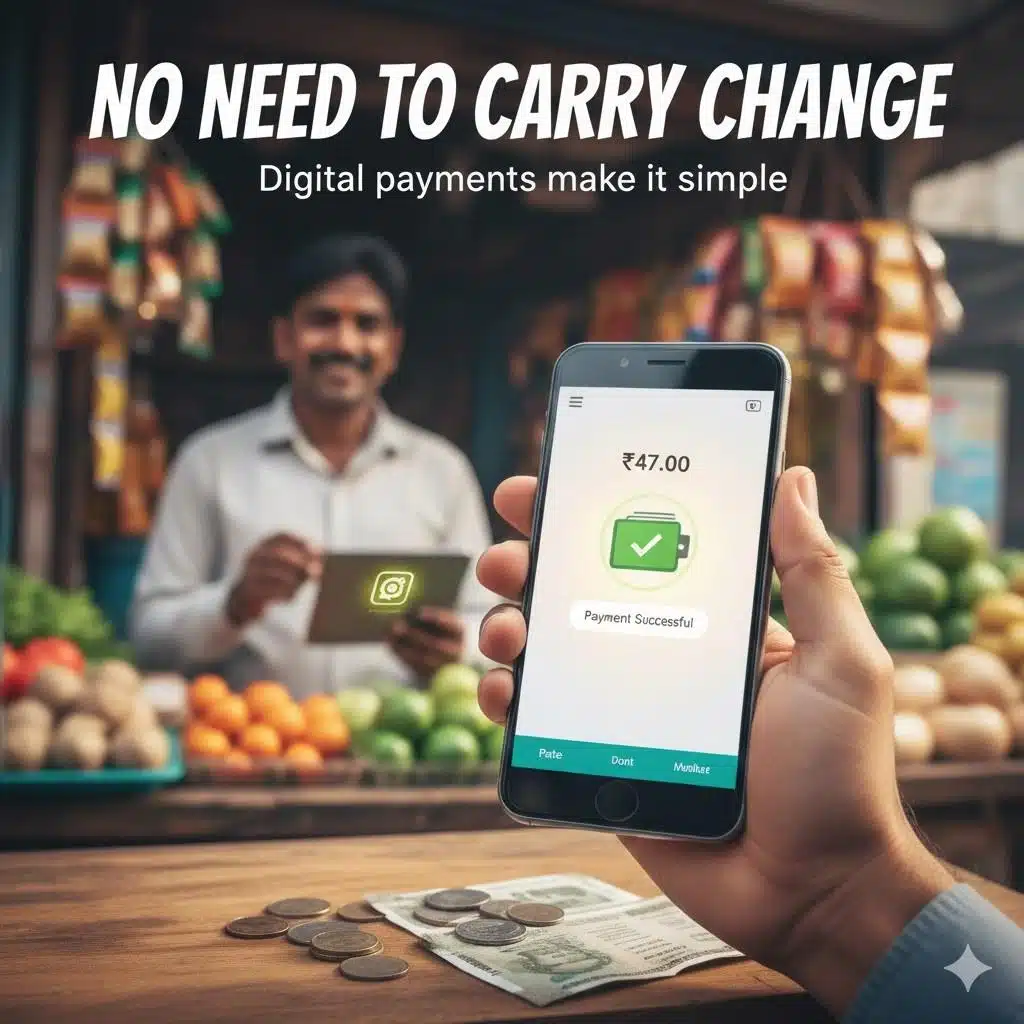
Digital payments let you pay exact amounts without needing coins. Small transactions like ₹15 or ₹47 become simple. You won’t face “no change available” situations at shops.
On average, India processes nearly 700 million UPI transactions every day, according to data from the National Payments Corporation of India (NPCI).
From roadside vendors to large retailers, digital acceptance has grown significantly.
4. Easy Bill & Recharge Payments
You can pay electricity bills, mobile recharges, and other utilities from your phone. No need to visit payment centers or stand in lines. Apps send reminders before due dates.
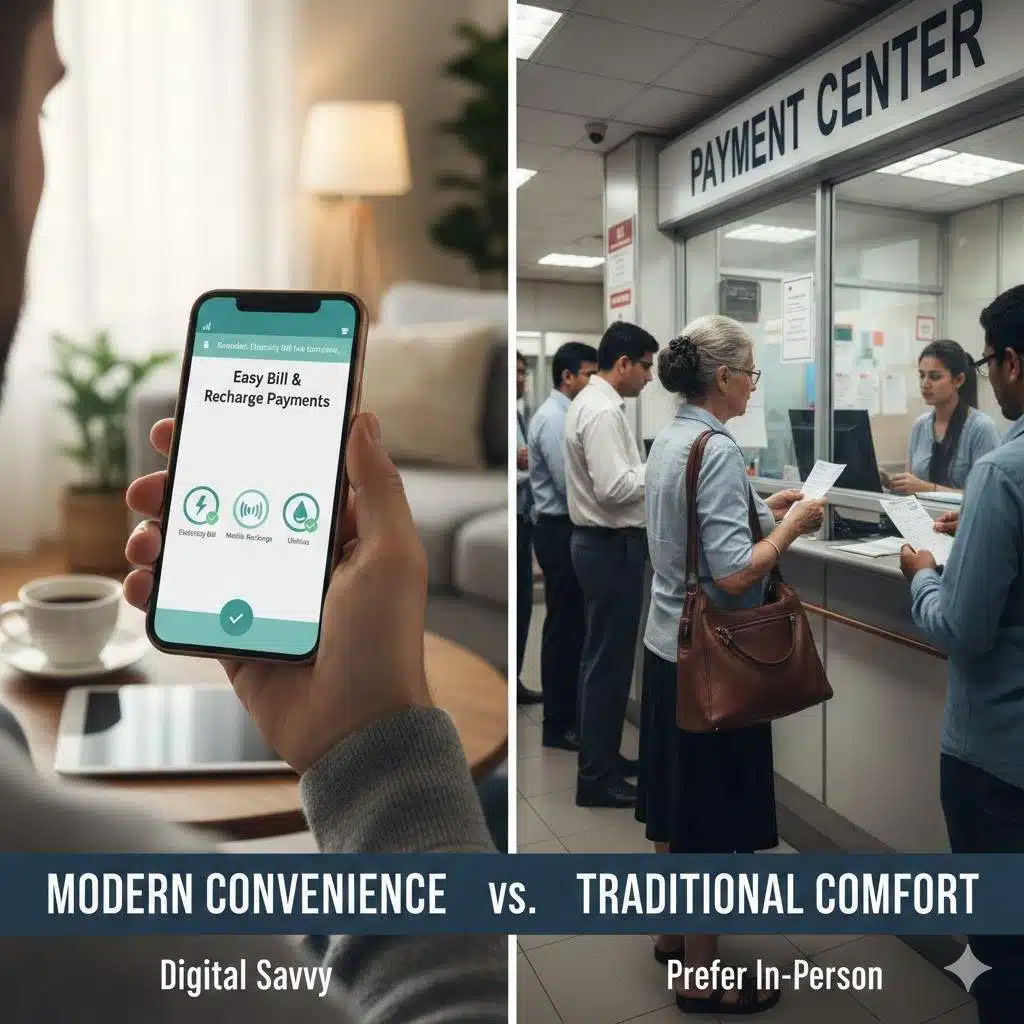
This saves time if you have internet access and are comfortable with using apps. Older people or those unfamiliar with technology may find visiting a payment center simpler. The convenience depends on your comfort level with digital tools.
5. Cashback, Rewards & Discounts
Many payment apps offer cashback or reward points on transactions. You might get ₹10 back on a ₹100 payment. These offers vary by platform and change frequently.
Some require minimum spending or specific merchants. The savings can add up over time, though the offers are designed to encourage platform loyalty. It’s a benefit, but one that comes with conditions attached.
6. Safer Than Cash (Bank-Level Security)
Digital payments use encryption and require PIN or password verification. Banks monitor transactions for unusual activity. Multiple security layers protect your money.
But security depends on your behavior; sharing OTPs, clicking suspicious links, or using weak passwords undermines these protections. The system is secure if used carefully. Mistakes can still lead to losses.
7. Full Transaction History (Proof of Payment)
Every digital transaction creates a record you can access anytime. This helps track spending and provides proof of payment. For business owners, this simplifies accounting.
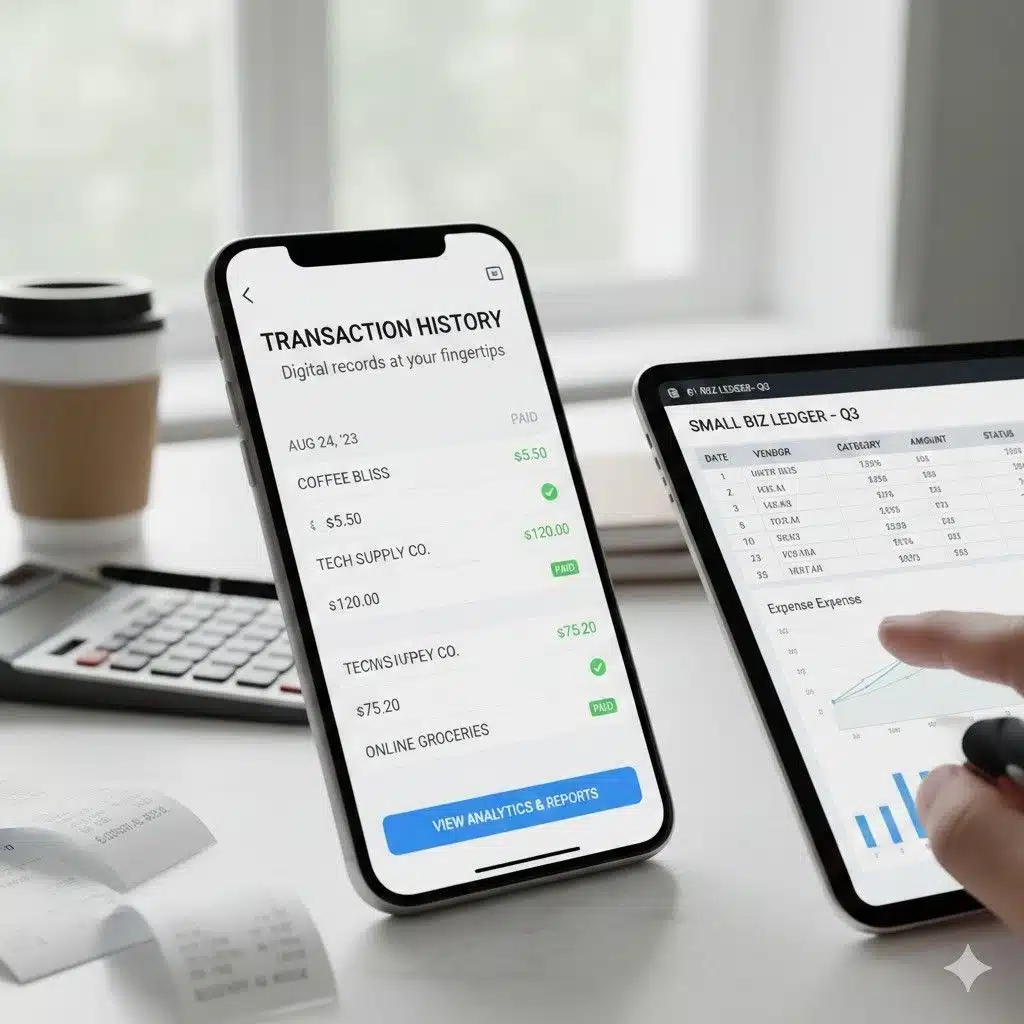
The downside is that everything gets recorded; there’s no privacy in your spending patterns. Your transaction data is collected by apps and banks. It’s transparent, but that transparency cuts both ways.
8. Accepted in Shops, Online & Travel
Digital payments work at most urban and semi-urban shops now. You can use them online, in restaurants, and for travel bookings. Many small vendors have QR codes.
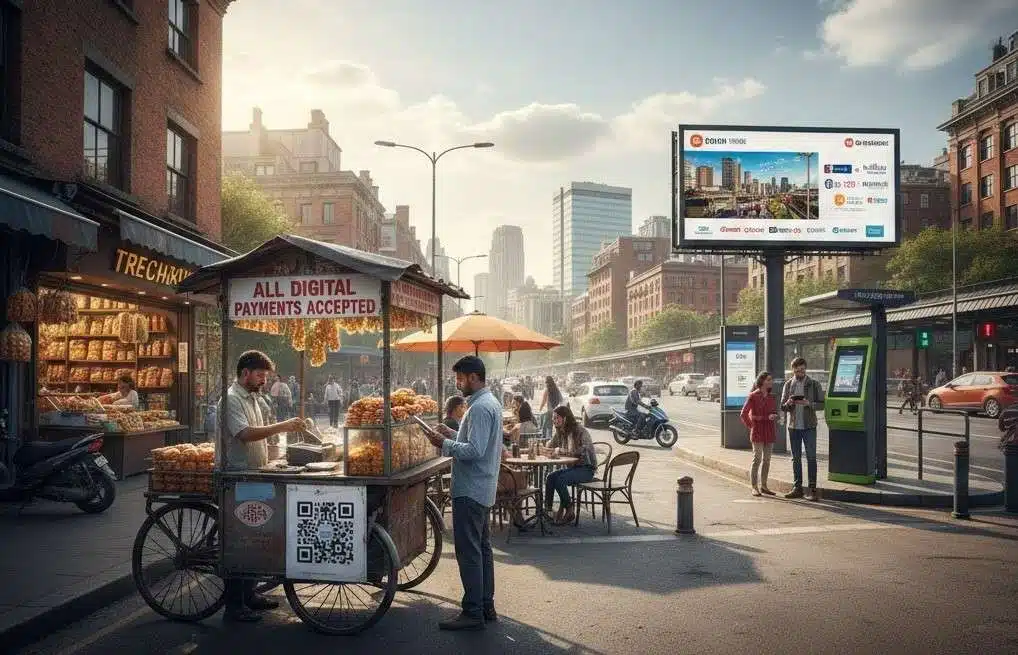
However, acceptance isn’t universal. Some rural areas still operate primarily on cash. Some merchants add surcharges for digital payments. It works in most places, but not everywhere yet.
9. Helps Build Financial Discipline
Payment apps show where your money goes, which can help you track spending. Seeing expenses categorized might make you more aware of your spending habits. This visibility can improve budgeting.

However, the ease of digital payments can also make overspending easier, as you’re not physically handing over money, which some people find makes spending feel less “real.” The effect on discipline varies by person.
10. Supports Digital India & Paperless Economy
Digital transactions reduce the need for printing paper money and transporting cash. They create records that reduce black money circulation. This supports government transparency goals. Worldwide cash has reduced 46% due to online payments.
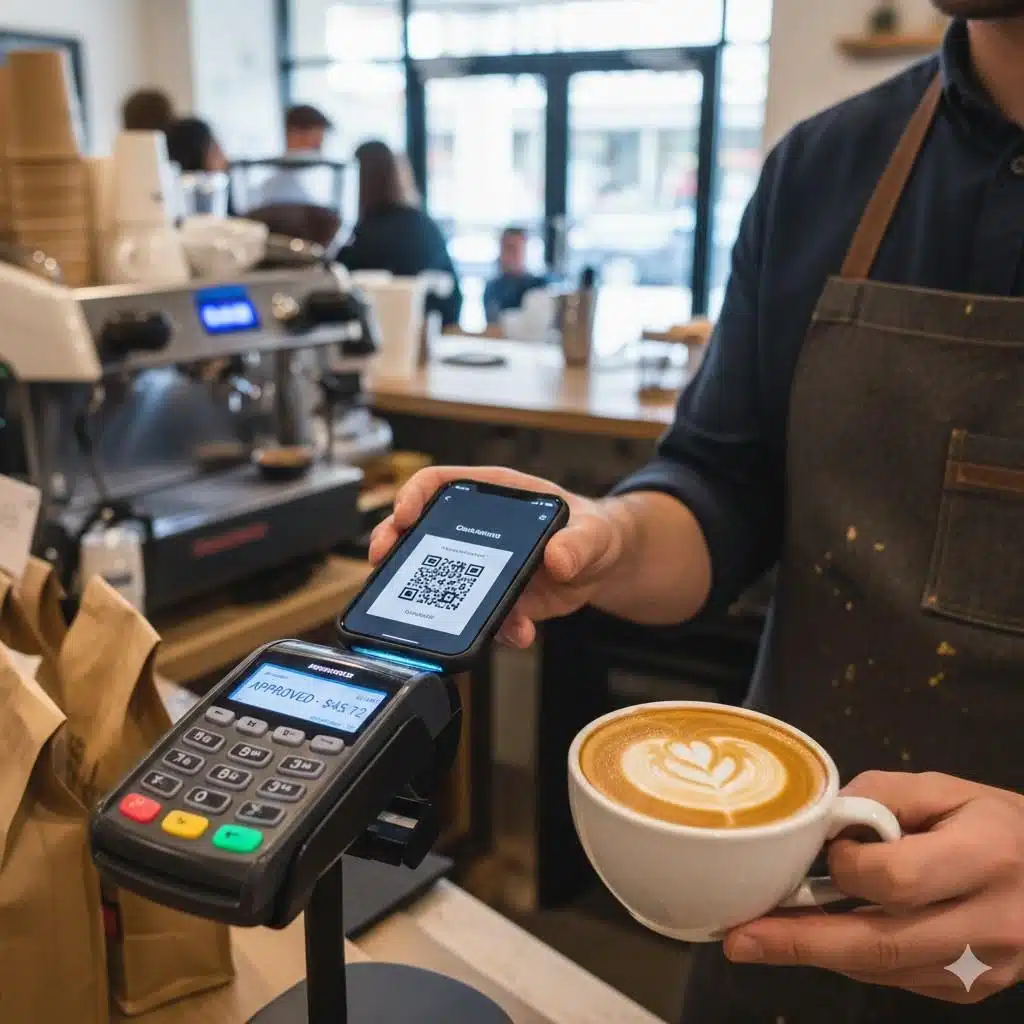
It also means all your financial activity is tracked and recorded. The trade-off is less privacy for potentially better governance. Whether this is good depends on your priorities.
Benefits Of Digital Payment In Banking
Digital payments have changed banking operations and reduced costs in several ways.
Here are some benefits of Digital Banking in banking:
- Reduced operational costs – Banks spend less on physical cash handling, storage, and branch operations.
- Faster transactions – Money moves instantly instead of the multi-day cheque clearing process.
- Better customer reach – Banks can serve customers in remote areas through mobile banking without building branches.
- Lower fraud risks – Automated systems detect suspicious patterns better than manual monitoring, though cyber fraud remains a concern.
- Improved record-keeping – Digital transactions create automatic records, making audits easier and reducing paperwork.
These changes benefit banks financially while offering customers faster service, though they’ve also led to branch closures in some areas.
Digital Payments Growth In India
India’s digital payment system has grown significantly in recent years, driven by UPI adoption.
| Metric | India Numbers |
|---|---|
| Monthly UPI transactions | 21.63 Billion (Dec 2025 peak) |
| Daily users | 450+ Million (Active transactors) |
| Retail acceptance | 90% of urban/semi-urban shops |
| Cashback savings | ₹150–₹250 avg/month per user |
| RuPay Credit on UPI | 40% of all UPI credit volume share |
| UPI Lite Adoption | 10,000 daily spend limit (₹1,000 per txn) |
| FASTag Daily Avg | 12.3 Million transactions |
Source: NPCI | Daily Users | India Pays | Credit Card | UPI Lite
The numbers show rapid adoption in urban and semi-urban areas, though rural adoption still lags behind.
FASTag Daily Average: Calculated from the NPCI monthly report of 384 million transactions in December 2025 (384 / 31 = ~12.3M daily).
Disadvantages Of Digital Payment
Digital payments have real limitations that affect different users in different ways.
1. Requires Internet Connection
Digital payments need a working internet or mobile data. In areas with poor network coverage, payments fail or don’t go through. If your data runs out or the network is down, you can’t pay digitally. Cash works regardless of infrastructure.
2. Technology Learning Curve
Not everyone finds apps easy to use. Elderly people often struggle with the interface and concepts. Many people don’t have smartphones or can’t afford data plans. This creates exclusion for certain groups who find cash simpler.
3. Cyber Fraud Risks
Scammers constantly develop new tricks to steal money digitally. Fake payment apps, phishing messages, and fraud calls trick people into sharing OTPs. Once money is transferred to fraudsters, recovery is difficult.
4. Transaction Failures
Money sometimes gets deducted from your account, but doesn’t reach the receiver. Server issues, app crashes, or technical glitches cause these failures.
Getting refunds requires contacting customer support and waiting. During this time, you’re stuck without access to that money.
5. Privacy Concerns
Every digital transaction is tracked and recorded. Payment companies collect data about your spending habits, location, and preferences. This data gets used for advertising and is sometimes shared with third parties.
6. Dependent on Battery & Device
If your phone dies or breaks, you can’t make payments. Unlike cash that’s always accessible, digital payments require a working device. This creates problems when traveling or during emergencies.
7. Merchant Resistance
Some vendors refuse digital payments to avoid transaction fees or tax records. Traditional markets and small businesses sometimes only accept cash. This limits where you can actually use digital payment despite claimed universal acceptance.
8. Account Freezing Issues
Banks freeze accounts when they detect unusual activity, sometimes incorrectly flagging legitimate transactions. Until resolved, you can’t access your money.
This can happen when traveling or making large purchases. The security measures that protect you can also lock you out of your own funds temporarily.
Benefits Of Digital Payment In Business
Digital payments offer specific advantages for businesses, though they also come with costs.
1. Faster Payment Collection
Businesses receive money immediately instead of waiting for cheques to clear. This improves cash flow for operations. However, some payment methods charge transaction fees that cut into profits.
2. Lower Cash Handling Costs
Businesses avoid expenses for cash counting, storage, and security. There’s no risk of receiving counterfeit notes. However, they face new costs like card machines, transaction fees, and potential chargebacks.
3. Automatic Accounting Records
Digital payments create automatic transaction records. This simplifies bookkeeping and tax filing. However, businesses must maintain digital systems and backups.
4. Expands Customer Reach
Accepting digital payments allows businesses to sell online nationwide. It attracts customers who prefer cashless options. However, online sales bring competition from across the country.
5. Professional Business Image
Having digital payment options makes businesses appear modern. This attracts younger customers who expect cashless options. However, some traditional customers may actually prefer dealing with businesses that accept cash.
Benefits Of Digital Payment For Different Users
Different groups experience digital payments differently based on their needs and circumstances.
| User | Benefit | How They Benefit |
|---|---|---|
| Students | Pocket money tracking | Can see where money goes; parents can send funds instantly |
| Salaried | Bills & savings | Automatic bill payments prevent late fees; spending tracking helps with budgeting |
| Shopkeepers | No cash handling | Avoids counterfeit note risk; simplifies accounting |
| Online buyers | Easy refunds | Money returns directly to the account; order tracking works well |
| Businesses | GST & accounting | Digital records simplify tax filing; appears professional |
Each group gets specific benefits but also faces unique challenges based on their situation and tech comfort level.
The advantages are real but not universal. Individual experience depends on location, digital literacy, and access to stable infrastructure.
Is Digital Payment Better Than Cash?
Digital payment offers advantages in speed and security for many situations. Transactions are complete in seconds instead of requiring a physical cash exchange.
Money stays in your bank account rather than your pocket, reducing theft risk. Transaction records provide proof of payment.
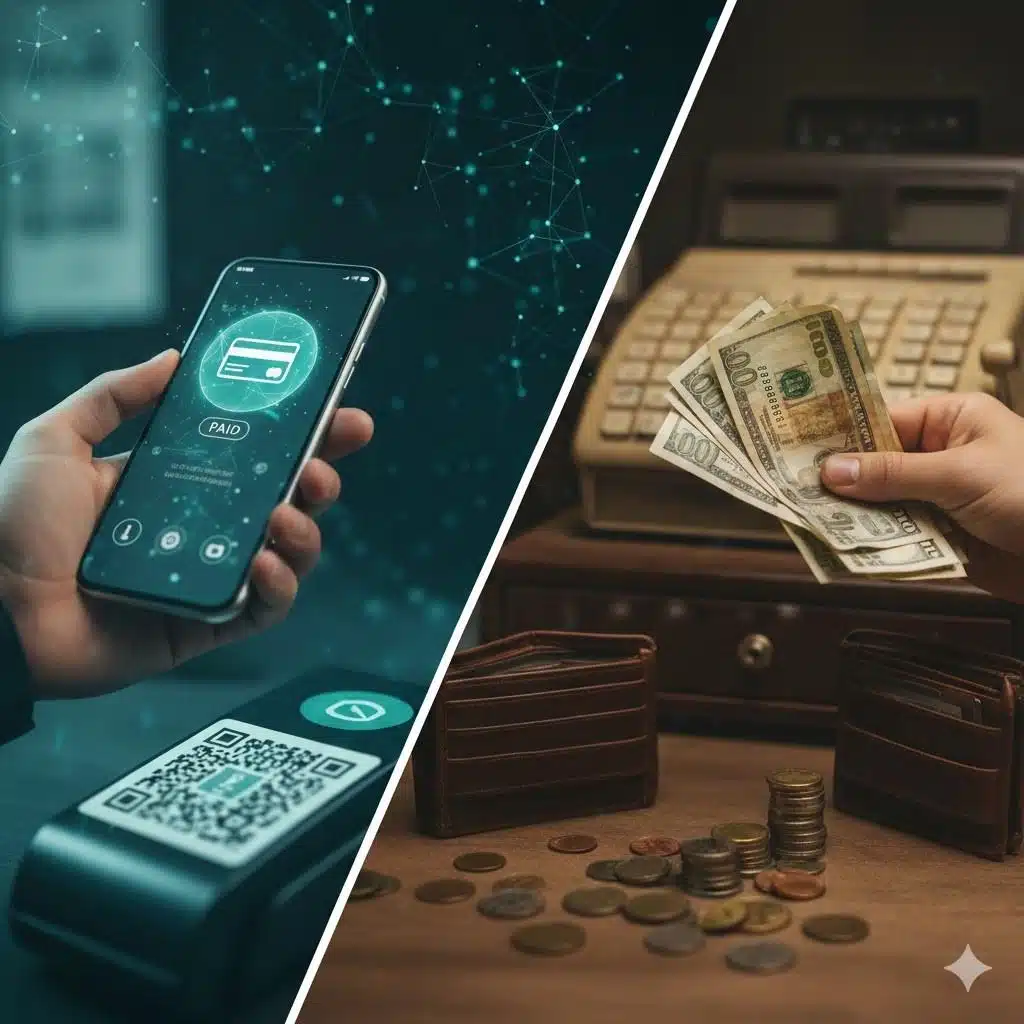
Digital works online where cash cannot. However, cash works without internet, leaves no data trail, and is universally accepted, including by those outside the banking system.
Which is “better” depends on your specific situation, location, and priorities. Both have their place.
Digital Payment vs Cash – Which Is Better?
The comparison depends on what matters most to you in different situations.
| Feature | Digital Payment | Cash |
|---|---|---|
| Speed | Instant | Slow |
| Safety | High (if used carefully) | Low (physical theft) |
| Tracking | Automatic (no privacy) | None (complete privacy) |
| Cashback | Yes (with conditions) | No |
| Online use | Yes | No |
| Tax record | Yes (automatic) | No |
Digital payments excel in speed and online use but sacrifice privacy. Cash offers anonymity but no protection against loss.
For most urban situations, digital payment is more convenient. In rural areas or for privacy-conscious transactions, cash still has advantages.
How To Start Using Digital Payment (Step-by-Step)
Getting started with digital payments is straightforward if you have the basics.
Step 1: Choose a UPI app: Download apps like Google Pay, PhonePe, Paytm, or BHIM. They’re free, but collect your data.
Step 2: Link your bank account: Enter your bank-registered mobile number. Verify through SMS. This connects the app to your bank.
Step 3: Create UPI PIN: Set a 4 or 6-digit PIN. Don’t share this with anyone, including people claiming to be from the bank.
Step 4: Start paying: Scan merchant QR codes, enter the amount, and confirm with PIN. Start with small amounts until comfortable.
Is Digital Payment Safe In India?
Digital payments in India use several security measures. UPI encryption protects transaction data from being intercepted.
The RBI and NPCI oversee the system and set security standards. Every transaction requires OTP, PIN, or biometric verification.
However, the safety depends heavily on user behavior. Sharing OTPs with scammers, clicking phishing links, or using weak passwords can compromise security.
Fraud exists, and people do lose money. Digital security requires active participation, not just trusting the technology.
Government Support For Digital Payments
The government actively promotes digital payments through various programs. The Digital India initiative encourages cashless transactions.
UPI infrastructure receives government investment and support. The RBI and NPCI develop security features and new payment options.
Zero MDR policy means small merchants pay no fees for accepting payments below ₹2,000, though this also means banks earn less revenue from small transactions.
Related Reads:
Conclusion: Digital Payments Are Faster, Safer, And Smarter Than Using Cash
Digital payments have changed how many Indians handle money, with 228.3 billion UPI transactions in 2025 showing significant adoption.
However, the system isn’t perfect. It requires infrastructure that doesn’t exist everywhere. In urban areas with good connectivity, it works well for most purposes.
Most people will likely end up using both digital for convenience when it works, and cash as backup when it doesn’t.
The growth is real, and the benefits exist, but so do the limitations. Understanding both helps you use digital payments effectively while protecting yourself from the downsides.
FAQ
Digital money transfers instantly, can’t be physically stolen, creates automatic records, and works for online purchases.
Online banking provides 24×7 account access, instant transfers, easy bill payments, automatic transaction records, multiple security layers, lower fees than branch banking, and no need for physical visits.
Payments enable the exchange of goods and services. Digital payments make this exchange faster and create records. You get transaction proof and sometimes rewards.
Digital banking saves time by eliminating branch visits, offers instant services, provides complete transaction history, and sends automatic alerts.
Digital payments are instant, work around the clock, reduce theft risk, provide automatic records, offer occasional cashback, and are accepted widely.
The four main types are UPI payments (instant bank transfers), digital wallets (stored money in apps like Paytm), credit/debit cards (physical or virtual), and net banking (direct bank website transfers).
Digital payment is faster, creates automatic records, works online, and can’t be physically stolen. However, cash works without internet, offers complete privacy, and is accepted everywhere.
Digital India improves access to government services, reduces corruption through transparency, promotes a cashless economy, creates tech jobs, and connects rural areas with the internet.
Digital payment means transferring money electronically through phones, computers, or cards without physical cash. Money moves between bank accounts through internet-connected systems.